How to choose an AI implementation partner
To choose an AI implementation partner, test who owns the KPI, how the baseline is set, who does the work, what platform is reused, how fees track outcomes, where your data runs and what you keep at exit. The strongest partner agrees to be measured on your own books before the build starts.
Why enterprise AI implementation needs a different kind of partner
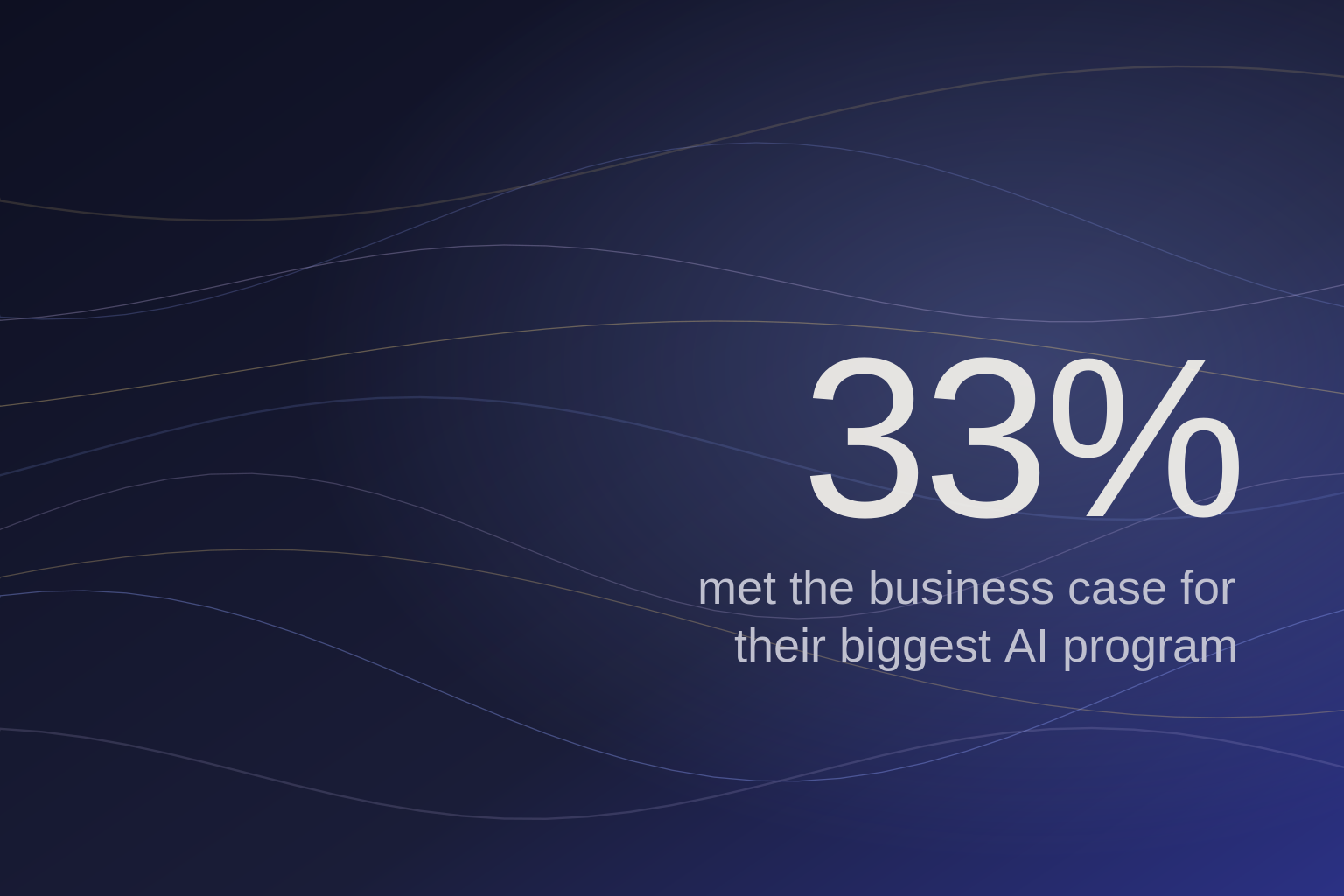
Most enterprises have bought AI and few can show what it earned. McKinsey finds that only 37 percent of organizations attribute any EBIT impact to AI 1, and HFS Research reports that only 33 percent of enterprises met or exceeded the business case for their most significant AI program 2. That share rises to 56 percent where AI is embedded in operations 2.
The gap usually opens between separate contracts with separate owners. One firm writes the AI strategy, another builds the system and a third licenses the models, so the KPI the program was meant to move belongs to nobody. Knowing how to choose an AI partner starts with asking which party will own that number, and what each party leaves behind when it goes.
| Front | Consultancies | Systems integrators | AI automation agencies | AI labs (Segeta) |
|---|---|---|---|---|
| Who owns the outcome | The client, guided by the recommendation | The client, against a delivered scope | The client, for each automated task | Segeta, jointly with the client, against a signed baseline |
| How they are paid | Advisory fees, with outcome-linked terms spreading | Time and materials, fixed price or managed-service fees | Fixed project fees or monthly retainers | A share of fees tied to the agreed KPI, measured on the client's books |
| What they deliver | Diagnosis, AI strategy, roadmap and change program | Implemented platforms, integrations and migrations | Automated tasks, often on no-code tools | A live workflow run by Segeta's agents, with sector models where needed |
| Speed from pilot to production | Weeks to a plan, then a separate build | Months to quarters for large programs | Days to weeks for a discrete task | About six weeks to a live workflow |
| What stays with you | A plan, an operating model and trained leaders | A system you or the integrator maintain | Automations you maintain or renew | Software that keeps learning, plus your own models, evals and decision records |
| Best when | Enterprise-wide change at global scale | ERP and core platform migrations | A stable, discrete task that needs quick automation | One measurable workflow built on tacit knowledge |
Test one: who owns the outcome
Ask each candidate to name the business number it will be accountable for, the person on its side who signs it and what happens to its fees if the number stays flat. A partner that owns the outcome will name a KPI from your existing reports, such as cycle time, cost per case or cash collected, and will agree to report against it every month.
Test two: how the baseline is set
A partner that cannot describe its baseline method cannot prove its results. Ask for the KPI definition, the data source of record, the baseline window and the holdout design, and ask who signs the baseline before the build. Bain finds that nearly 40 percent of firms measuring AI savings realized less than 10 percent of them 3, a gap that a signed baseline exposes early.
Test three: forward-deployed engineers and senior pods
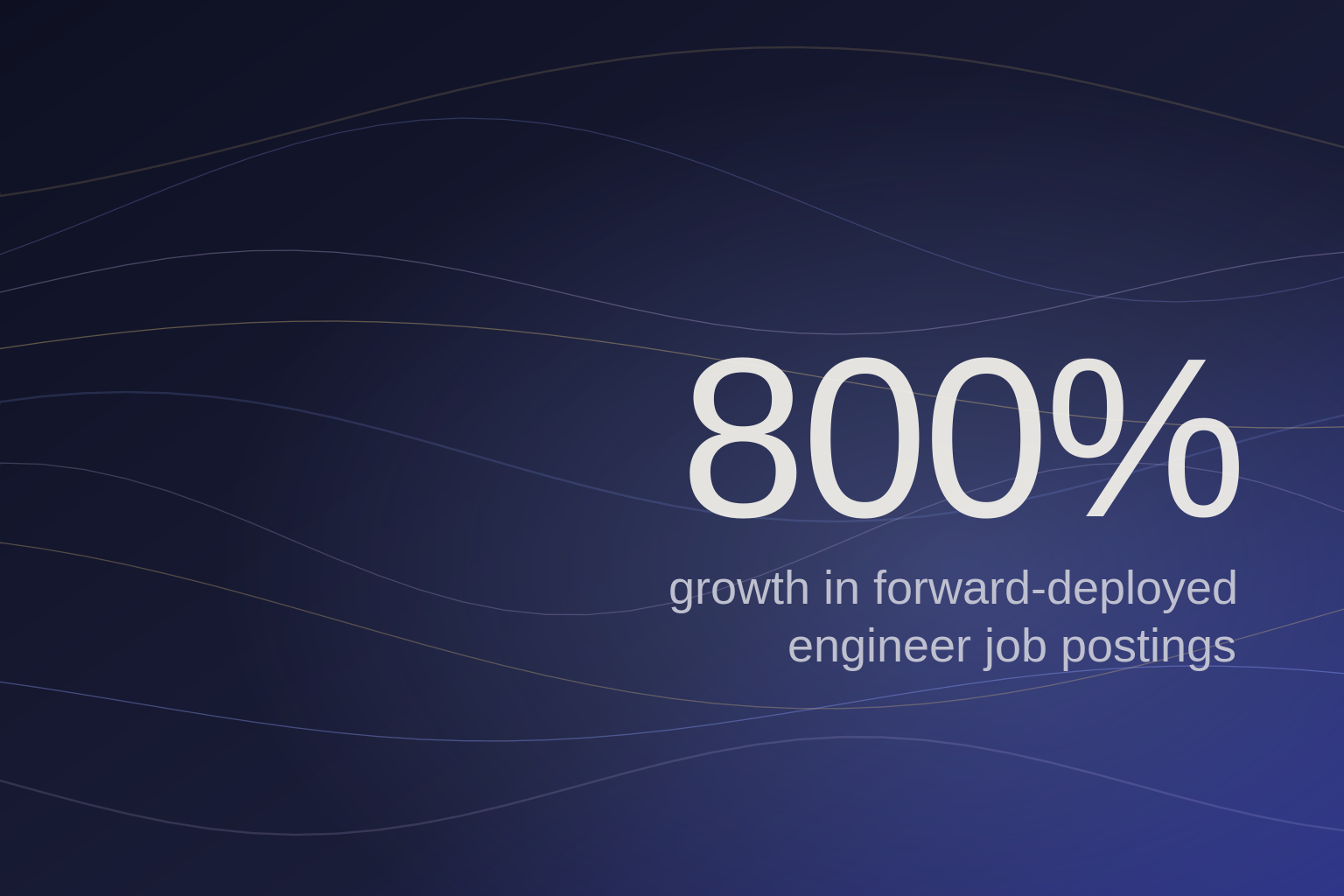
Forward-deployed engineers have become the standard for enterprise AI implementation that touches live workflows. Andreessen Horowitz counts FDE job postings up about 800 to 1,000 percent in 2025 4. Ask who will sit with your operators, how senior they are, and whether the people who design the workflow also build and run it.
Ask as well how many people each workflow needs and how that number falls over time. A pod that mixes a product lead, AI engineers and a researcher can own the judgment calls, the code and the evaluations together, which shortens the path from AI pilot to production.
Test four: a reusable platform behind the team
Andreessen Horowitz warns that copying only the embedded engineers produces bespoke deployments that cannot be maintained, a services business priced like software 4. A partner with a real platform can show what carries over from one client to the next: connectors, ontologies, evals, runbooks and agent components. Foundation Capital cites one ingestion kit that cut later deployment time by 70 percent 5, the kind of evidence a buyer can request.
Test five: outcome-based pricing for AI services
Outcome-based pricing for AI services aligns incentives when the outcome is measurable and the definitions are tight. Decagon reports that most of its customers chose per-conversation pricing over per-resolution pricing, citing predictability and disputes over what counts as resolved 6. Agree the attribution method, the guardrail metrics and the dispute process before signing, and decide what share of fees sits at risk.
Test six and seven: data control, deployment and exit
Ask where the system runs, whether your data trains models used for other clients and how every agent action is logged and approved. In the survey by Bain Capital Ventures of about 50 enterprise technology leaders, total cost ranked seventh among purchasing criteria, behind security, privacy and reliability 7.
Then settle exit terms before the build begins. Ownership of code, prompts, evals, model weights and decision records should sit with you. Foundation Capital describes decision traces, the exceptions, overrides and approvals behind each decision, as the missing layer that makes autonomy auditable 8, and a contract that leaves them with the supplier hands over institutional memory.
Consultancies, integrators, AI automation agencies and AI labs compared
Each type of AI implementation partner suits a different job, and the table below sets out where each one fits. The categories overlap in practice, since many large firms run consulting and integration arms side by side.
When each alternative is the better choice
A frank comparison has to say where Segeta is the wrong fit. Each category below wins a specific kind of work, and many large programs combine two of them.
- Global consultancies such as McKinsey, BCG or Accenture are usually the better choice for enterprise-wide transformation at global scale, where the AI roadmap spans organization design, many geographies and thousands of people.
- Systems integrators are usually the better choice for an ERP or core platform migration, where certified talent, delivery governance and scale matter most.
- AI automation agencies are usually the better choice for fast, low-cost automation of a discrete task, often built on no-code tools, when the workflow is stable and nobody needs a KPI owned.
- Applied AI labs such as Segeta are usually the better choice when one workflow runs on tacit knowledge across several systems, the result can be measured on your books and you want fees tied to that result.
Checklist: how to choose an AI partner
Use this list in every partner conversation, and score each answer against what the contract will say.
- The partner names the KPI it will own and the person who signs it.
- The baseline is signed from your own systems before any build starts.
- A holdout or staggered rollout will separate the AI effect from other changes.
- Guardrail metrics for quality, errors and compliance are written into the contract.
- A senior forward-deployed pod will sit with the people who run the work.
- The partner can show components reused from earlier deployments.
- A defined share of fees depends on the KPI, with a dispute process agreed.
- The plan names a date for moving from AI pilot to production, and a stop rule.
- The system runs in your cloud or in-region, and your data trains no one else's model.
- Every agent action is logged, and risky actions wait for a named approver.
- You keep the code, evals, model weights and decision records at exit.
Questions leaders ask
What should I ask an AI implementation partner before signing?
Ask who owns the KPI, how the baseline is set and signed, who will do the work, what is reused from earlier deployments, what share of fees depends on results, where your data runs and what you keep at exit. Ask for each answer in contract language, with named owners and dates.
What is the difference between an AI automation agency and an applied AI lab?
An AI automation agency builds fast, low-cost automations for discrete tasks, often on no-code tools, and rarely owns a business KPI or retrains models. An applied AI lab embeds a senior pod, builds and runs a full workflow on the client's systems, post-trains models where needed and is usually measured on a business number.
What are the warning signs that an AI partner will stall in pilot?
Warning signs include no named KPI, no baseline method, a team that changes after the sale, no evidence of reused components, fees that rise with hours regardless of results and vague answers on data residency and exit. Each one makes it harder to prove value or to leave cleanly.
Should an AI implementation partner own our models and data?
Ownership should sit with the client wherever possible. Ask for your own model weights, evals, prompts and decision records, deployment in your cloud or in-region, and a commitment that your data trains no other client's model. Settle these terms before the build, because they are hard to change later.
Notes and sources
- McKinsey & Company, "The State of AI 2026: On the Road to ROI," McKinsey & Company, August 2026, mckinsey.com.
- HFS Research and Rackspace, "Only One-Third of Enterprises Realize Expected AI Value," wire release via Finviz, November 2026, finviz.com.
- Bain & Company, "Realization Rate: The Metric Reshaping Enterprise AI," Bain & Company, October 2026, bain.com.
- Andreessen Horowitz, Marc Andrusko, "The Palantirization of Everything," a16z, January 2026, a16z.com.
- Foundation Capital, Ashu Garg and Jaya Gupta, "The $4.6T Services-as-Software Opportunity: Lessons from the First Year," Foundation Capital, July 2025, foundationcapital.com.
- Decagon, Bihan Jiang, "Pricing the AI Agent Economy," Decagon, December 2024, decagon.ai.
- Bain Capital Ventures, "There Is No AI Pricing Playbook. Here Are the Patterns Winning Right Now," Bain Capital Ventures, October 2026, baincapitalventures.com.
- Foundation Capital, Jaya Gupta and Ashu Garg, "AI's Trillion-Dollar Opportunity: Context Graphs," Foundation Capital, December 2025, ashugarg.substack.com.
Talk to Segeta Talk to Segeta about the one workflow where you need a partner that owns the number.
Go deeper.
Five questions to ask before signing an AI transformation partner
Most AI transformation proposals promise measurable value, and most are still priced on effort. Five tests, each answerable before a contract is signed, separate the partners prepared to own a business result from those selling hours, licenses or tokens.
The three-invoice problem in enterprise AI
Most enterprises buy their AI transformation from three parties, a strategy firm, an integrator and a model vendor. Each is paid for effort it controls, so the business KPI, which none of them controls alone, ends up owned by nobody.
The forward-deployed model pays only when each deployment compounds
AI vendors now send engineers into client operations as a matter of course, and the cost of that model shows up in every rollout plan. In an enterprise AI transformation, buyers can tell a compounding platform from a services business in disguise by whether each deployment needs less custom work than the last, and they can price that curve.
Decision traces become the asset AI services firms compound
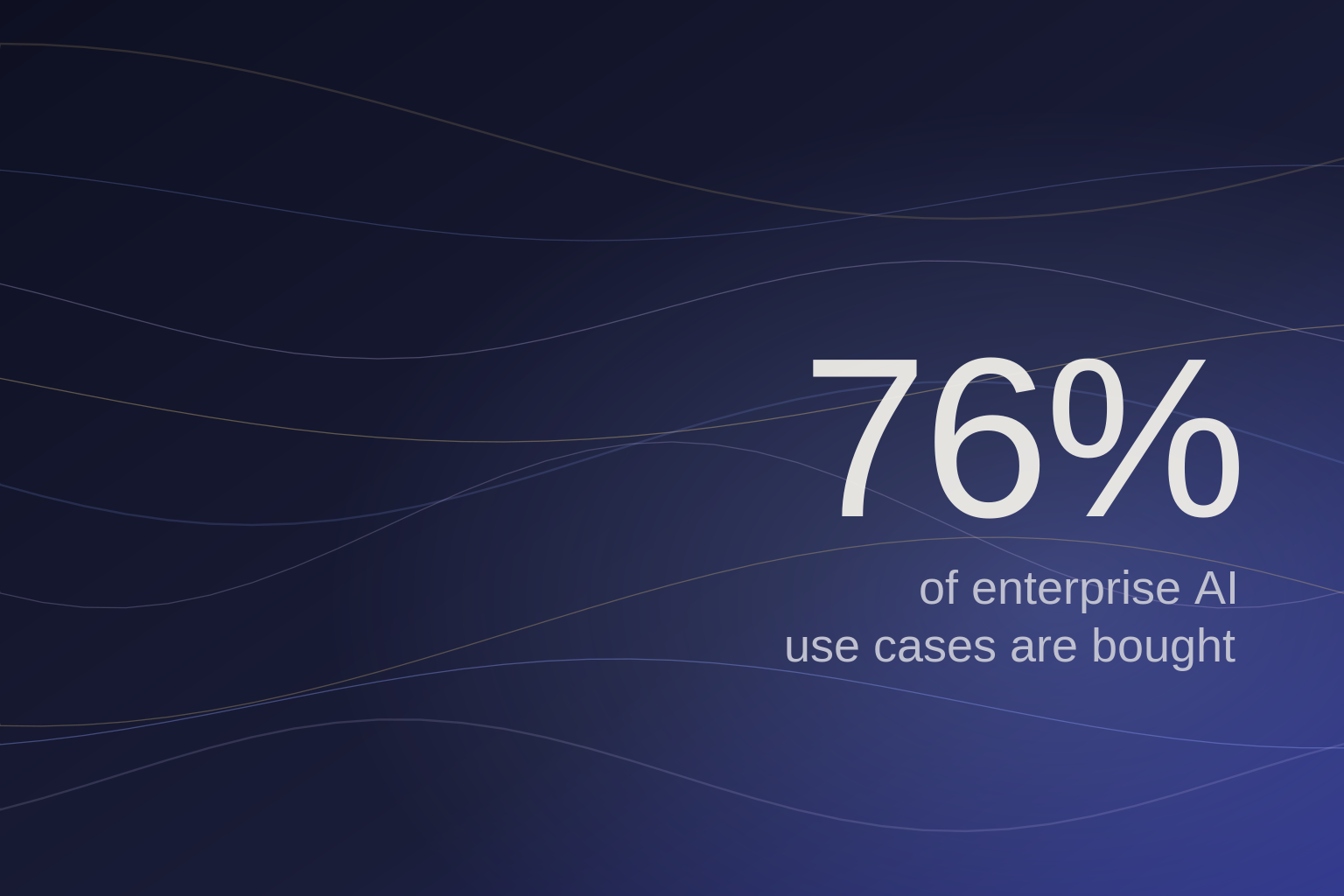
Enterprises now buy most of their AI use cases from outside vendors, and every deployment produces a record of the exceptions, overrides and approvals behind each decision. That record is what makes the next deployment cheaper, and buyers who leave it out of the contract hand their institutional memory to the supplier. Ownership of that record shapes every later step of an enterprise's AI transformation.
You cannot price an AI outcome you have not baselined
An AI transformation priced on outcomes breaks down most often over measurement, when buyer and supplier hold different numbers for the same KPI. Treating the baseline as the first deliverable, captured by the same instruments that will judge the result, settles most of the dispute before it starts.