Outcome-based pricing for AI services and how it is measured
Outcome-based pricing for AI services ties some or all of the provider's fees to a measured business result, such as resolved tickets, cash collected or cycle time cut. It works when both sides sign a baseline in advance, use holdouts to attribute the change, track guardrail metrics and agree how disputes are settled.
Why AI services are moving to outcome-based pricing
When software does the work, the seat stops being a sensible unit of price. Andreessen Horowitz argues that AI is turning services into software, so seats lose their place as the pricing unit 1. Sequoia describes the same shift as moving from selling the tool to selling the work 2, and IDC expects pure seat-based pricing to be obsolete by 2028 3.
Services contracts are moving in the same direction. About a quarter of McKinsey's global fees now come from outcome-based pricing, according to a firm partner quoted by Business Insider 4, and IDC expects 30 percent of service-provider contracts to be outcome-based by 2029 5.
Real examples of outcome-based pricing
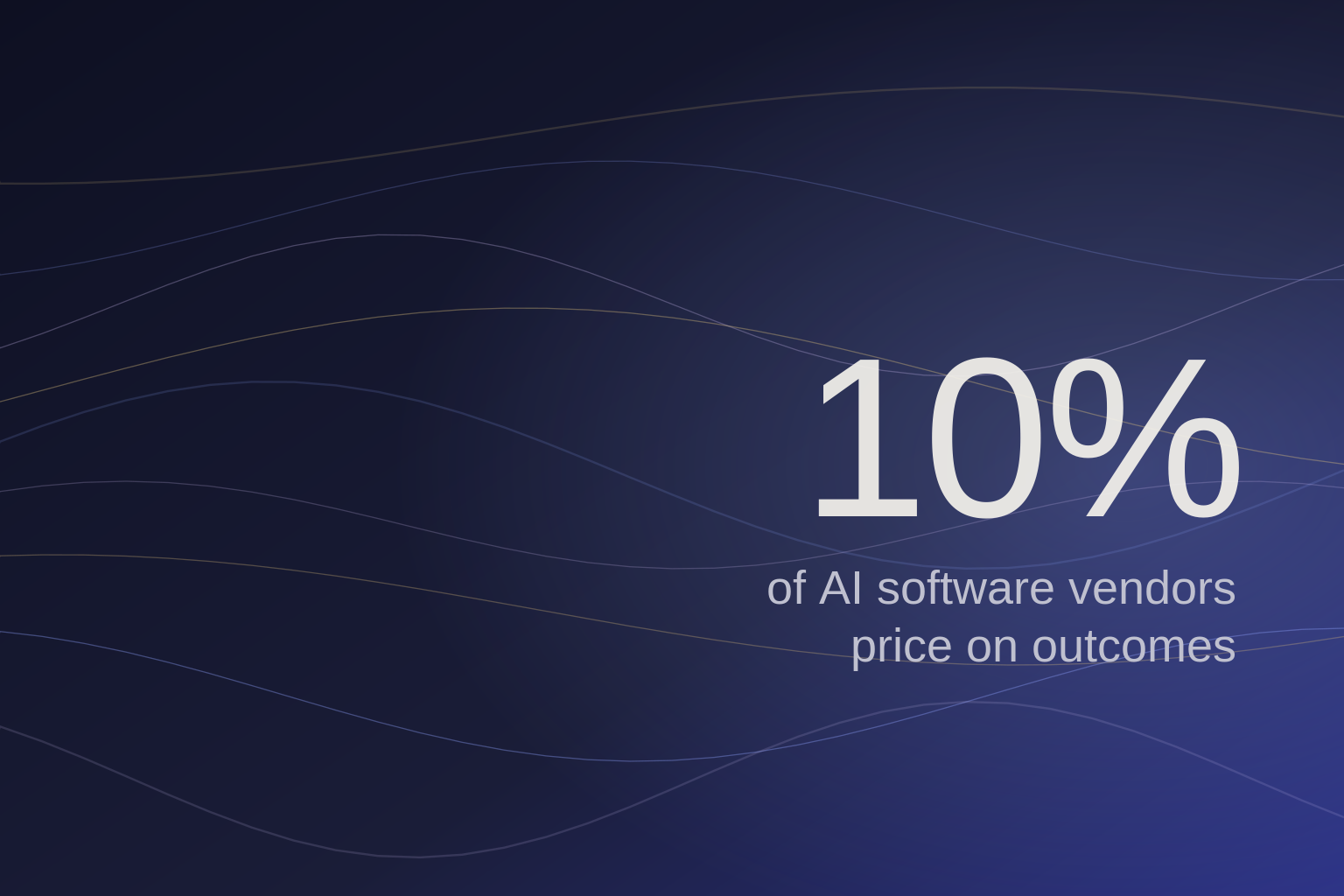
Customer support is where outcome pricing has the deepest roots. Bain's review of about 200 B2B software vendors found that about 10 percent use outcome meters, and that outcome pricing has found a real home in customer support 6.
- Intercom charges $0.99 per outcome for its Fin AI agent, and default escalations to a human carry no charge 7. Configured procedure handoffs are now billed, so the definition of an outcome lives in the terms.
- Sierra is paid on resolved conversations, saved cancellations and upsells, so each fee follows a business event 8.
- Zendesk introduced pricing in 2024 under which customers pay only for issues its AI resolves autonomously 9.
- Salesforce moved Agentforce from $2 per conversation to Flex Credits at $0.10 per action, alongside per-user licenses 10.
- Decagon reports that most of its customers choose per-conversation pricing over per-resolution pricing, citing predictability and disputes over what counts as resolved 11.
What the Decagon caveat teaches buyers
The Decagon finding is the central caution for any buyer. Buyers like the alignment of outcome pricing and dislike arguing over definitions, and the a16z survey of 100 enterprise CIOs found them still uncomfortable with how outcome metrics are set, measured and billed 12. The measurement design decides whether an outcome contract works in practice.
How outcomes are measured
A workable outcome contract fixes five elements before the build starts, and each one closes a common source of dispute.
- Baseline: both parties sign the current value of the KPI over a fixed window, taken from the client's own systems.
- Holdout: a comparable slice of work, sites or customers runs without the AI for a period, so the change can be separated from seasonality and market moves.
- Attribution: the contract names the method that assigns the difference between the treated group and the holdout to the AI work.
- Guardrail metrics: quality, error, complaint and compliance measures must hold steady, so the headline number cannot be gamed.
- Disputes: an agreed data source, a named reviewer and a timetable settle disagreements before invoices go out.
How much of the fee should be at risk
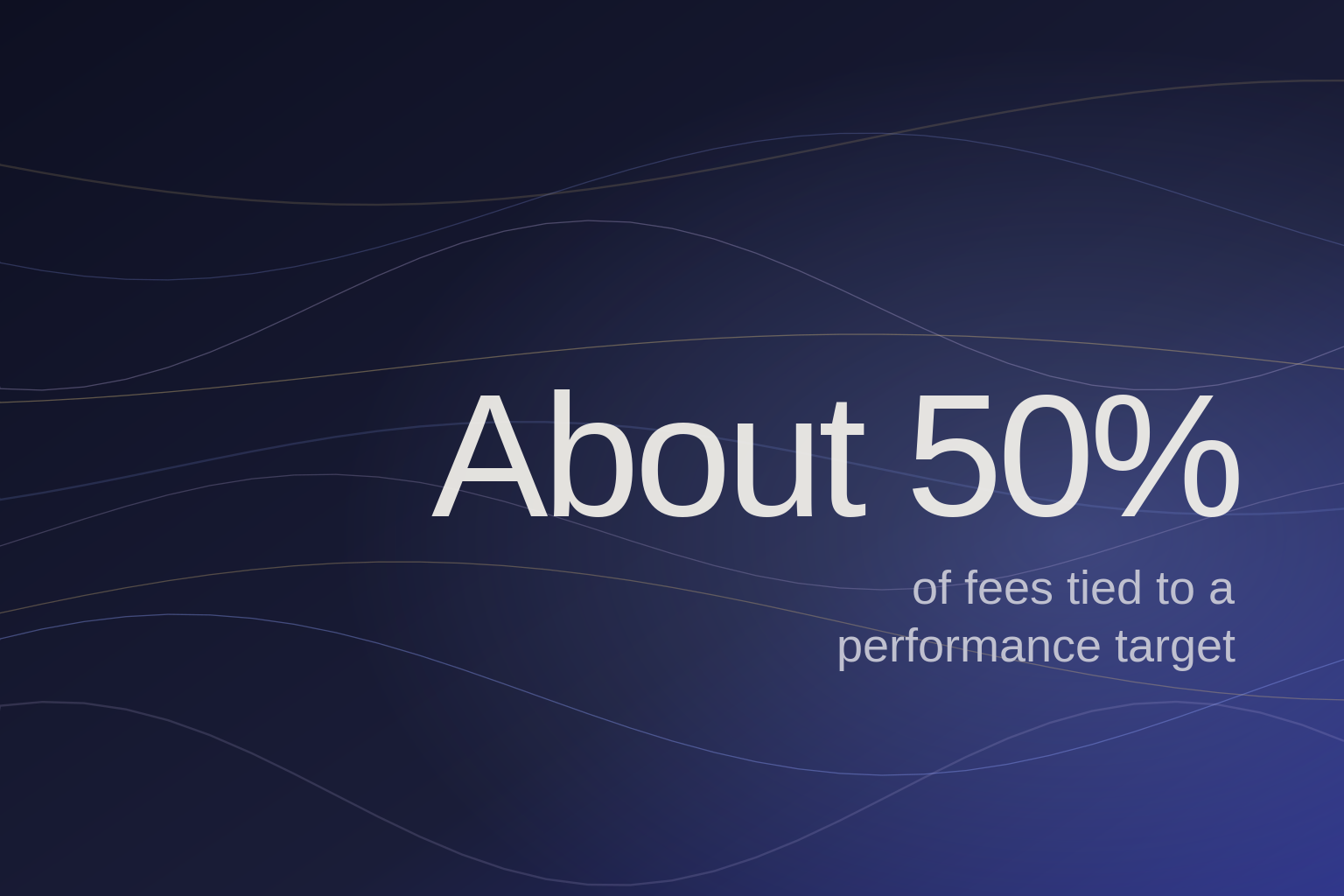
There is no standard share of fees at risk across the market. Arrakis, an AI-native services firm, usually ties about half of its fees to a specific performance target, according to Fortune 13. Bain Capital Ventures finds that a fixed platform fee plus a usage layer is the most common enterprise model 14.
Bessemer notes that outcome pricing fits when performance is reliable, cost variance can be absorbed and the outcome is unambiguous and measurable 15. Where those conditions are weak, a smaller variable share with a clear ramp protects both sides. The upside can be large, since Kyle Poyar estimates that subscription software captures about 10 to 15 percent of the value it delivers, against about 20 to 30 percent for success-based pricing 16.
How Segeta prices AI services
Segeta prices against a growth number agreed before the build and measured on the client's own books. Its Outcome Ledger ties every release to the number it was meant to move, using signed baselines, holdout attribution and tamper-proof records. The rule is no outcome, no code, so work that cannot name its number does not start.
Questions leaders ask
What is an example of outcome-based pricing in AI?
Intercom charges $0.99 per outcome for its Fin AI agent, Sierra is paid on resolved conversations, saved cancellations and upsells, and Zendesk charges for issues its AI resolves autonomously. In AI services, providers tie a share of fees to a business KPI, such as cycle time or cash collected, measured against a signed baseline.
How do you prevent disputes in outcome-based contracts?
Disputes fall when the contract defines the outcome precisely, signs a baseline from the client's own systems, names the attribution method and the holdout, and sets guardrail metrics. It also helps to name one data source of record and a reviewer who settles disagreements on a fixed timetable before invoices are issued.
What share of fees is usually at risk in outcome-based pricing?
The share varies widely across providers, sectors and contract types. Fortune reports that one AI-native services firm ties about half its fees to a performance target, while many enterprise deals use a fixed platform fee plus a variable layer. The right share depends on how reliable and measurable the outcome is.
Is outcome-based pricing more expensive than time and materials?
It can cost more per unit of result when results are strong, because the provider carries the risk of missing them. Buyers pay for verified results, and Kyle Poyar estimates that success-based pricing captures about 20 to 30 percent of value delivered, against about 10 to 15 percent for subscription software.
Notes and sources
- Andreessen Horowitz, Ivan Makarov, James da Costa and Bobby Pinero, "AI Is Driving a Shift Towards Outcome-Based Pricing," a16z Enterprise Newsletter, December 2024, a16z.com.
- Sequoia Capital, Julien Bek, "Services: The New Software," Sequoia Capital, March 2026, sequoiacap.com.
- IDC, "IDC FutureScape 2026 Predictions Reveal the Rise of Agentic AI and a Turning Point in Enterprise Transformation," IDC, October 2025, idc.com.
- Business Insider, "AI Is Reshaping How McKinsey Makes Money," Business Insider via Yahoo Finance, November 2025, finance.yahoo.com.
- IDC, "Charting the Agentic Future of IT Services: From Projects to Platforms," IDC, October 2025, idc.com.
- Bain & Company, "AI Pricing: A Reality Check on Effort, Usage, and Outcomes," Bain & Company, August 2026, bain.com.
- Intercom, "Fin AI Agent Resolutions," Intercom Help Center, November 2026, intercom.com.
- Sierra, "Outcome-Based Pricing for AI Agents," Sierra, December 2024, sierra.ai.
- Zendesk, "Zendesk Outcome-Based Pricing," Zendesk Newsroom, August 2024, zendesk.com.
- Salesforce, "Agentforce Flexible Pricing," Salesforce press release, May 2025, salesforce.com.
- Decagon, Bihan Jiang, "Pricing the AI Agent Economy," Decagon, December 2024, decagon.ai.
- Andreessen Horowitz, "How 100 Enterprise CIOs Are Building and Buying Gen AI in 2025," a16z, June 2025, a16z.com.
- Fortune, "Arrakis Emerges from Stealth with $38 Million in Venture Funding," Fortune, July 2026, fortune.com.
- Bain Capital Ventures, "There Is No AI Pricing Playbook. Here Are the Patterns Winning Right Now," Bain Capital Ventures, October 2026, baincapitalventures.com.
- Bessemer Venture Partners, "The AI Pricing and Monetization Playbook," Bessemer Atlas, February 2026, bvp.com.
- Kyle Poyar, "From Selling Access to Selling Work," Growth Unhinged, October 2024, growthunhinged.com.
Talk to Segeta Talk to Segeta about pricing your next AI workflow against a number your finance team signs.
Go deeper.
What private equity's two and twenty teaches AI services pricing
Private equity aligned managers with investors decades ago through a management fee plus a share of gains above a hurdle. The work of AI transformation is still sold almost entirely as management fee, and the missing hurdle explains why carry has barely appeared.
Which AI-native services firms put their fees on the outcome
Many AI services firms speak of outcomes, and far fewer describe fees that depend on one. Among eight firms compared from public materials, three describe pricing tied to a result, and the strength of each model rests on how the firm discovers the work and agrees the baseline before it builds. For an enterprise, that pricing choice sits inside its AI transformation, because it decides who carries the risk when a partner's agents underdeliver.

AI vendors that own the outcome must also own the error
Outcome pricing promises that enterprises pay only for results, yet most AI contracts still leave the cost of a wrong result with the buyer. Technology leaders already rank reliability above price, and the vendors worth buying from will write the definition of an error, and who pays for it, into the contract. That clause decides whether an AI transformation bought as a service leaves the buyer carrying the errors.
You cannot price an AI outcome you have not baselined
An AI transformation priced on outcomes breaks down most often over measurement, when buyer and supplier hold different numbers for the same KPI. Treating the baseline as the first deliverable, captured by the same instruments that will judge the result, settles most of the dispute before it starts.
The three-invoice problem in enterprise AI
Most enterprises buy their AI transformation from three parties, a strategy firm, an integrator and a model vendor. Each is paid for effort it controls, so the business KPI, which none of them controls alone, ends up owned by nobody.