Segeta compared with consultants, systems integrators, AI automation agencies and AI vendors
Strategy and AI consultants own the plan, systems integrators own the build, AI automation agencies own discrete automations and AI software vendors own the license, so no single party owns the KPI. An applied AI lab such as Segeta builds, runs and is paid on that KPI. The right choice depends on scope and scale.
Why nobody owns the outcome
Most enterprise AI transformations are bought in pieces. A strategy firm writes the AI roadmap, an integrator builds and connects the systems and a software vendor licenses the models and tools. Each party is accountable for its own deliverable, and the business KPI the program was meant to move sits between their contracts.
The results show the cost of that gap. McKinsey's 2026 survey finds that only 37 percent of organizations attribute any EBIT impact to AI 1, and HFS Research reports that only 33 percent of enterprises met or exceeded the business case for their most significant AI program 2. That share rises to 56 percent where AI is embedded in operations 2.
| Front | Strategy consultants | Systems integrators | AI automation agencies | AI software vendors | Segeta |
|---|---|---|---|---|---|
| Who owns the KPI | The client, guided by the recommendation | The client, against a delivered scope | The client, task by task | The client, using the licensed tool | Segeta, jointly with the client, against a signed baseline |
| How they are paid | Advisory fees, with outcome-linked terms spreading | Time and materials, fixed price or managed-service fees | Project fees or retainers | Seats, usage or per-outcome meters | A share of fees tied to the agreed KPI |
| What they deliver | Diagnosis, AI strategy, roadmap and change program | Implemented platforms, integrations and migrations | Automated tasks, often on no-code tools | A product configured for the use case | A live workflow run by Segeta's agents |
| Who builds | Often a partner integrator or the client's IT team | The integrator's delivery teams | The agency's builders | The client or a partner, on the vendor's platform | A senior pod of product leads, AI engineers and researchers |
| What is left after they leave | A plan, an operating model and trained leaders | A system the client or integrator maintains | Automations the client maintains | A subscription that continues | Software that keeps learning, plus the client's own models and data |
| Speed to first value | Weeks to a plan, then a separate build | Months for large programs | Days to weeks for a discrete task | Fast for standard use cases | About six weeks to a live workflow |
| Best when | Enterprise-wide transformation at global scale | ERP and core platform migrations | A stable, discrete task needs quick automation | A standard use case with a mature product | One measurable workflow built on tacit knowledge |
AI consulting vs systems integrator: the direct answer
An AI consultancy decides what to do: it diagnoses value, sets the AI strategy, designs the operating model and guides change. A systems integrator delivers how it gets done: it implements platforms, migrates data, integrates systems and runs them at scale under a statement of work. Many large firms do both, and the distinction lies in what each contract pays for.
Buyers who need a board-level AI strategy across many business units usually start with a consultancy. Buyers with a defined platform to implement, such as an ERP migration, usually hire an integrator. Buyers who want one accountable AI implementation partner for a measured result in a specific workflow can look at an applied AI lab.
When each alternative is the better choice
Each category wins a specific kind of work, and the list below states where each one is the stronger option.
- Global consultancies such as McKinsey, BCG or Accenture are usually the better choice for enterprise-wide transformation at global scale, where the work spans strategy, organization design, many geographies and thousands of people.
- Systems integrators are usually the better choice for an ERP or core platform migration, large infrastructure programs and long-running managed services.
- AI automation agencies are usually the better choice for fast, low-cost automation of a discrete task, often built on no-code tools, where nobody needs a KPI owned or a model retrained.
- AI software vendors are usually the better choice for a standard use case with a mature product, such as a common support or coding workflow.
- Segeta is usually the better choice when one workflow depends on tacit knowledge across several systems, the result can be measured on the client's books and the client wants the fee tied to that result.
Alternatives to large firms for enterprise AI implementation
Enterprises searching for alternatives to large consultancies and integrators for AI delivery are often looking for a different contract shape. The large firms remain strong for scale and breadth, and outcome-linked terms are spreading among them; about a quarter of McKinsey's global fees now come from outcome-based pricing, according to a firm partner quoted by Business Insider 3.
Newer AI-native services firms add small senior pods and a reusable platform. Bessemer's evaluation framework for these firms asks whether AI can deliver at software-like margins and whether the firm can keep the surplus, under the principle that the outcome is the product 4. Buyers can ask every candidate who owns the KPI, how the baseline is set and what remains after the team leaves.
How Segeta closes the ownership gap
Segeta combines the roles in one accountable system. A forward-deployed pod frames the problem, builds on Segeta's Agent Factory and runs the result as a live agentic workflow, and an Outcome Ledger ties every release to the agreed number with signed baselines and holdout attribution. Fees follow that number, measured on the client's books.
Questions leaders ask
What is the difference between AI consulting and a systems integrator?
AI consulting decides what to do with AI: where value sits, which use cases to fund and how the operating model must change. A systems integrator builds and runs the technology at scale under a defined scope. Many large firms offer both, and each contract pays for a deliverable more than for the business result.
What is the difference between an AI automation agency and Segeta?
An AI automation agency delivers fast, low-cost automation of discrete tasks, often on no-code tools, and rarely owns a business KPI or retrains models. Segeta embeds a senior pod, runs a full workflow on agents built by its agent factory, post-trains models where needed and ties a share of its fees to a KPI measured on the client's books.
What are the alternatives to Accenture for AI delivery?
Options include other global consultancies and integrators, AI software vendors with forward-deployed teams, AI automation agencies for discrete tasks, and AI-native services firms and applied AI labs such as Segeta. Large firms remain a strong choice for global scale, while smaller firms often offer senior pods and fees tied to a measured KPI.
Can an applied AI lab work alongside a systems integrator?
Yes, and the combination is common in large programs. The integrator can own the ERP or core platform work while the lab builds agents on top of those systems through their existing interfaces, with the lab accountable for the KPI of the workflow it runs.
Notes and sources
- McKinsey & Company, "The State of AI 2026: On the Road to ROI," McKinsey & Company, August 2026, mckinsey.com.
- HFS Research and Rackspace, "Only One-Third of Enterprises Realize Expected AI Value," wire release via Finviz, November 2026, finviz.com.
- Business Insider, "AI Is Reshaping How McKinsey Makes Money," Business Insider via Yahoo Finance, November 2025, finance.yahoo.com.
- Bessemer Venture Partners, "Owning the Outcome: Bessemer's AI-Native Services Evaluation Framework," Bessemer Atlas, July 2026, bvp.com.
Talk to Segeta Talk to Segeta about which model fits your next AI program, including when the answer is another firm.
Go deeper.
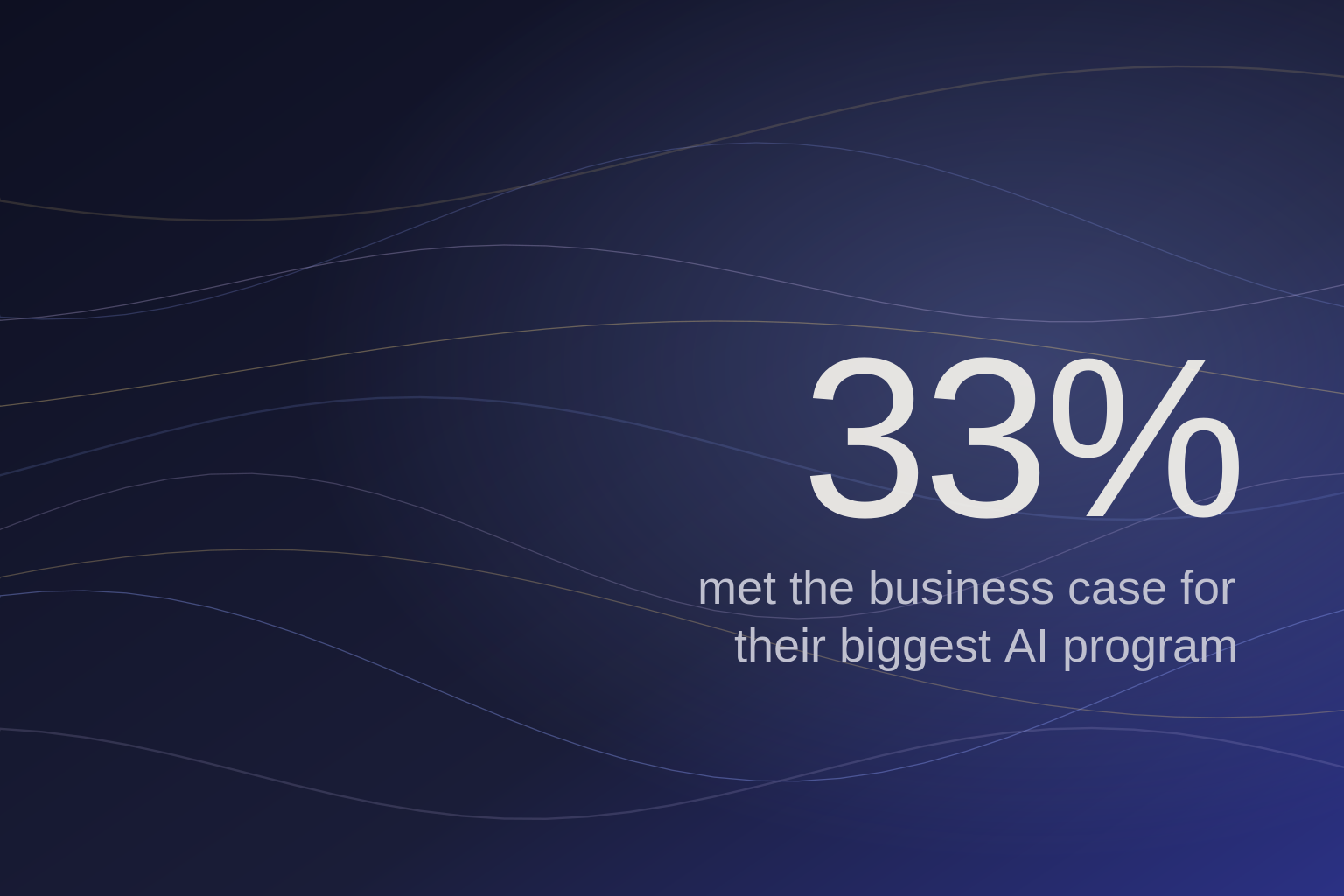
The three-invoice problem in enterprise AI
Most enterprises buy their AI transformation from three parties, a strategy firm, an integrator and a model vendor. Each is paid for effort it controls, so the business KPI, which none of them controls alone, ends up owned by nobody.
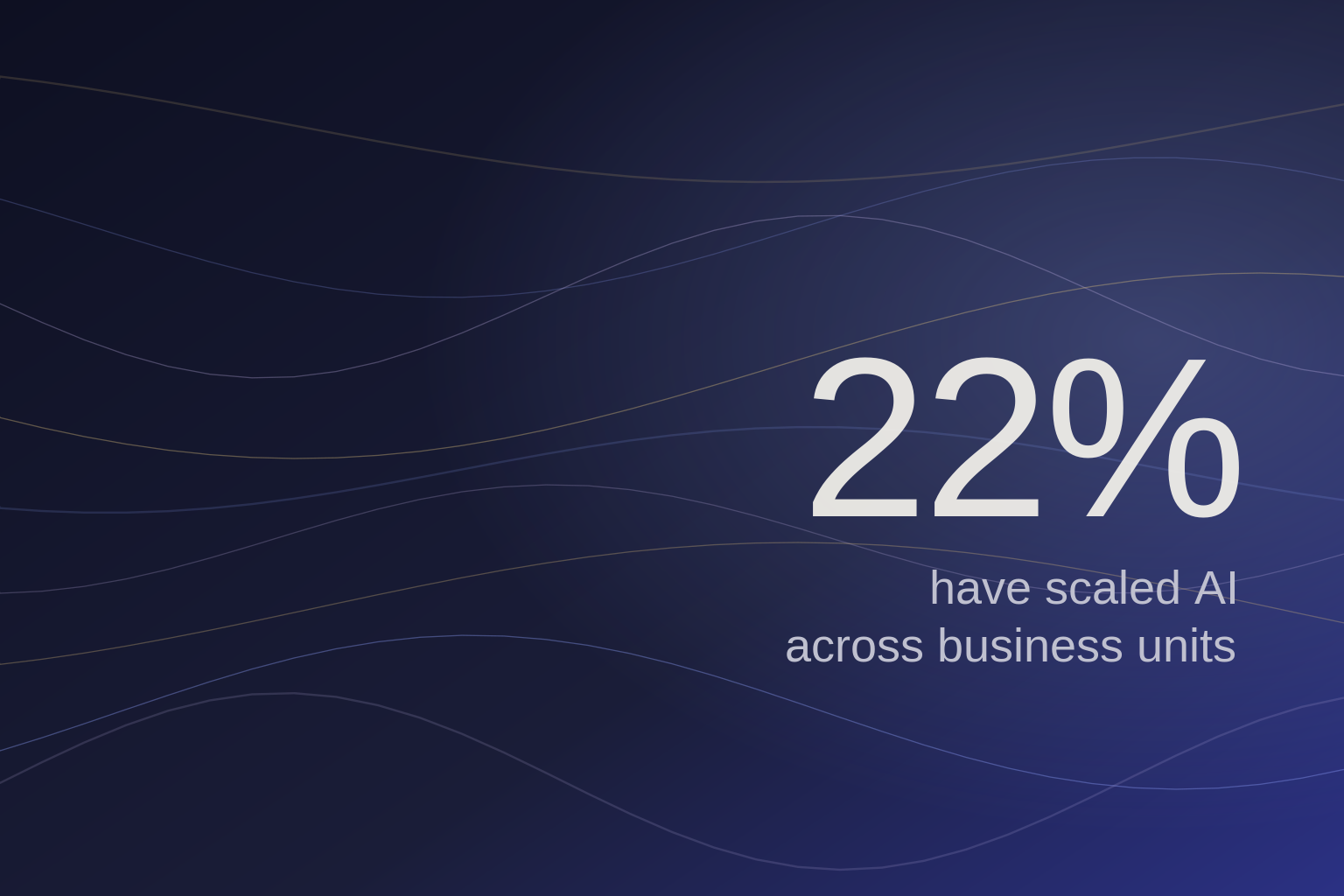
The hidden cost of buying enterprise AI in twelve pieces
Many enterprises are assembling their AI transformation from separate assistants, agents, extraction tools and platforms, each with its own data and its own measure of success. The history of the shipping container suggests the savings arrive only when the whole system is built around one standard unit.
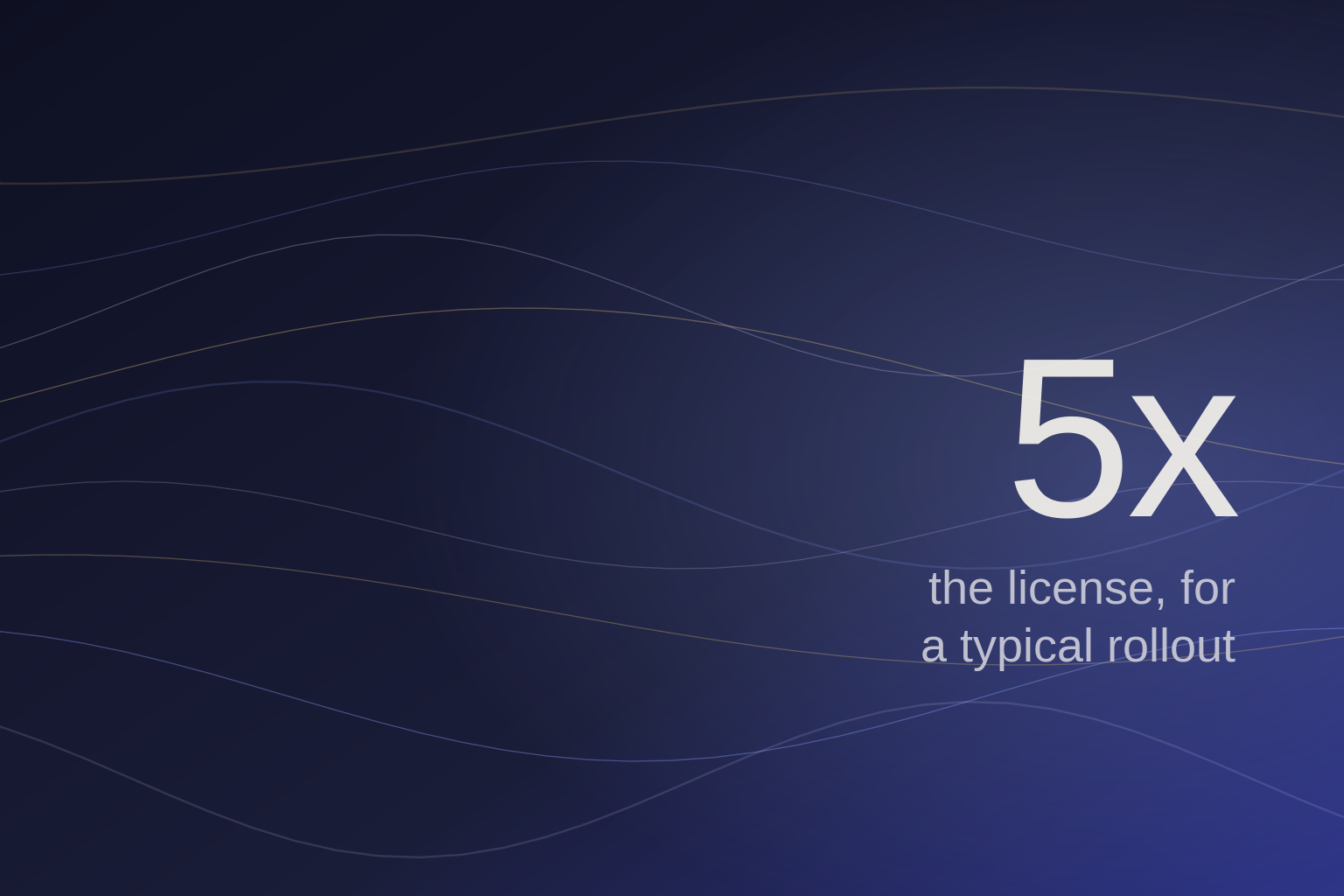
Why a new kind of systems integrator is forming around AI
Large platform rollouts often cost several times the license, and coding is the smallest part of that bill. A new class of AI-native integrators is targeting the discovery, migration, testing and adoption work that dominates every project. In an enterprise AI transformation, buyers can contract with them on the business KPI the system exists to move.
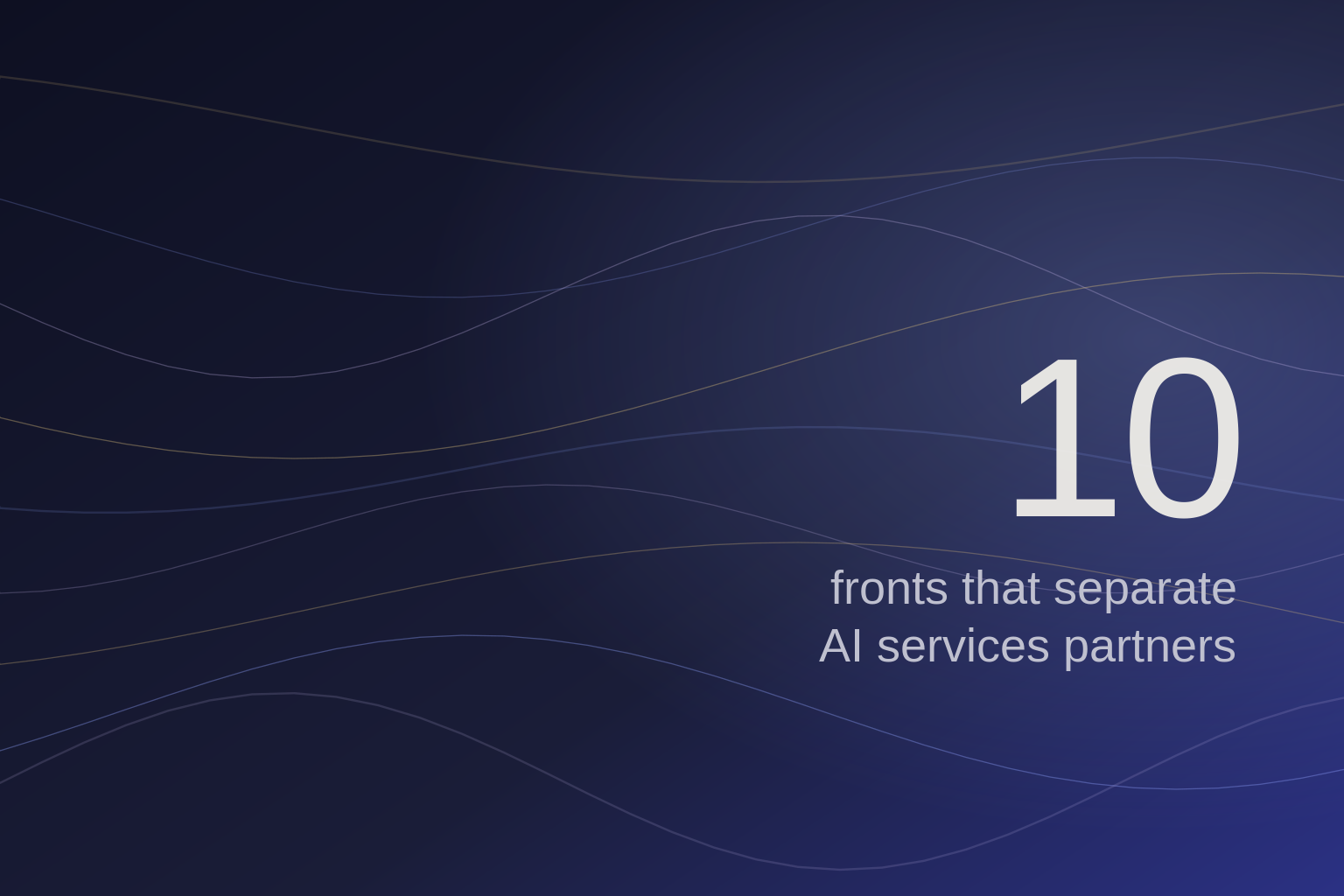
Eight AI-native services firms compared on ten fronts
Enterprises choosing a partner to deliver their AI transformation now meet a new class of firm that blends consulting, embedded engineers and software platforms. Compared on ten public fronts, every firm leads somewhere, and the useful difference for a buyer lies in how many fronts a single firm joins in one engagement.
Five questions to ask before signing an AI transformation partner
Most AI transformation proposals promise measurable value, and most are still priced on effort. Five tests, each answerable before a contract is signed, separate the partners prepared to own a business result from those selling hours, licenses or tokens.