What is a forward-deployed engineer, and when do you need one?
A forward-deployed engineer (FDE) is a software engineer who works inside a customer's operations to build, deploy and run AI systems on the customer's real data and workflows. FDEs map how work actually happens, turn edge cases into configuration and feed what they learn back into a shared platform. The model originated at Palantir and spread across AI firms.
Where the forward-deployed engineer role came from
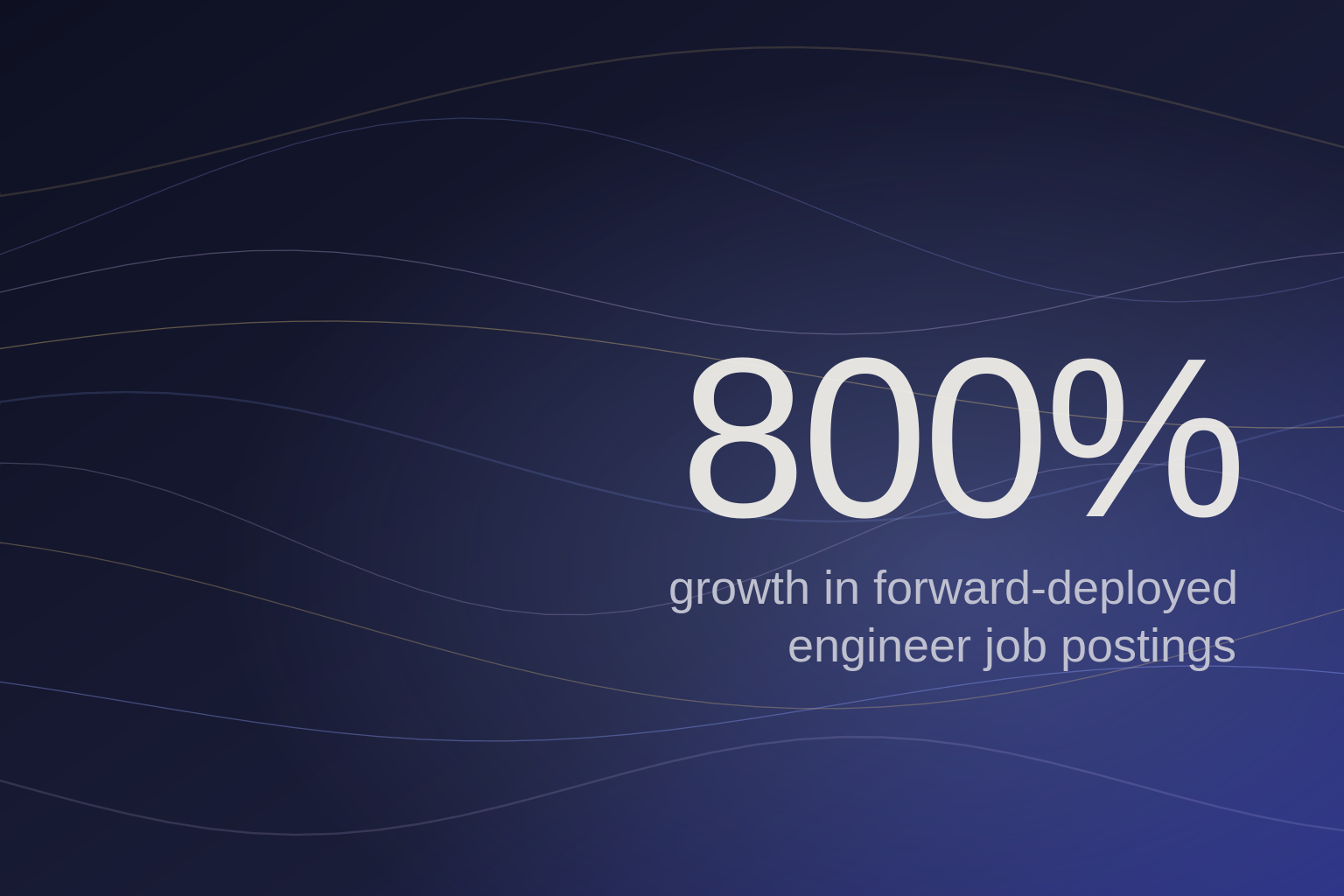
The forward-deployed model began at Palantir, where engineers sat with government and enterprise users to fit an integrated platform to mission-critical work. TechCrunch reports that the role has become the AI industry's talent obsession, with AI labs now running FDE-style services arms 1. Andreessen Horowitz counts FDE job postings up about 800 to 1,000 percent in 2025 2.
The reason is practical: enterprise AI implementation needs deep integration and context, and Foundation Capital concludes that integration is no longer a post-sale activity 3. Buyers want to see value on their own data before they sign.
What a forward-deployed engineer does
Foundation Capital describes a four-step method that matches what strong FDE teams do in practice 3.
- Shadow users to map the hidden workflow, including the exceptions that never reached a process document.
- Turn edge-case rules into configurable parameters so the next deployment needs less custom code.
- Instrument decisions with telemetry, so every agent action can be traced and evaluated.
- Package repeated work into reusable modules, as in one case where an ingestion kit cut later deployment time by 70 percent.
The services trap and how to avoid it
Forward deployment carries a known risk, and Andreessen Horowitz warns that copying only the embedded engineers produces bespoke deployments that cannot be maintained 2. Its suggested guardrails include time-boxed deployments of about 90 days to production, reusable primitives and configuration over code.
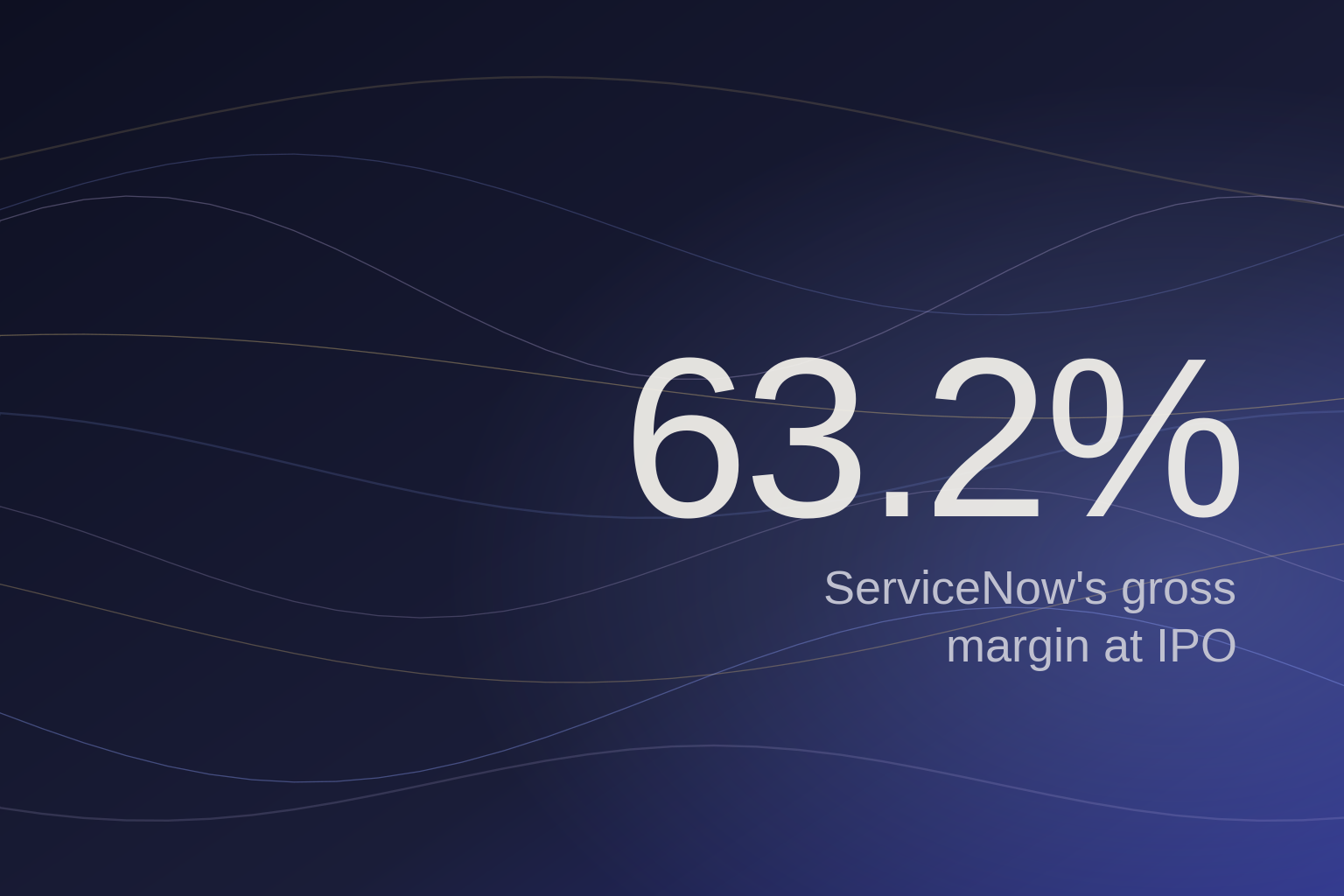
When the motion works, margins follow the workflow. Andreessen Horowitz notes that ServiceNow's gross margin rose from 63.2 percent at its IPO to 79 percent by 2024 as it came to own the workflow 4. The test for a buyer is whether each deployment needs less custom work than the last.
When you need a forward-deployed engineer
An FDE earns its cost when one or more of the following conditions holds for the workflow in question.
- The workflow depends on tacit knowledge, exceptions and approvals that live in people's heads and chats.
- Data sits across several systems of record that must be connected before an agent can act.
- Errors carry financial, safety or regulatory cost, so every output needs evaluation before use.
- The result is a business KPI that someone must own and measure against a baseline on the path from AI pilot to production.
When a forward-deployed engineer adds little
A standard use case served by a mature SaaS product usually needs a solutions engineer for configuration, and an FDE adds little there. Andreessen Horowitz suggests a product-led approach where problem criticality, domain fragmentation and data gravity are all low 2.
How Segeta uses forward-deployed pods
Segeta works through small senior pods that sit with the client. Forward-deployed product leads own the judgment calls and sign the outcome, AI engineers build with agents and run what they ship, and researchers handle post-training and evals. The pod builds on Segeta's Agent Factory, so each workflow adds to an industry pack that shortens the next one.
Questions leaders ask
What is the difference between a forward-deployed engineer and a solutions engineer?
A solutions engineer usually supports the sale and configures a product for a customer. A forward-deployed engineer works inside the customer's operations over a longer period, builds and runs the system on live data and workflows, and feeds what each deployment teaches back into the shared platform for the next client.
Why are AI companies hiring forward-deployed engineers?
Enterprise AI depends on integration, context and evaluation inside each customer's systems. Andreessen Horowitz counts FDE job postings up about 800 to 1,000 percent in 2025, and TechCrunch reports that AI labs now run FDE-style services arms, because buyers want value proven on their own data.
Is a forward-deployed engineer the same as a consultant?
The roles overlap on understanding the business, yet the FDE writes, deploys and runs production code. A consultant typically delivers analysis and a plan, while the FDE stays accountable for a working system and, in outcome-based engagements, for the business number that system was built to move.
How long does a forward-deployed engagement last?
Engagement length varies by provider, workflow and data access. Andreessen Horowitz suggests time-boxing deployments to about 90 days to production. Segeta's standard path reaches a live workflow in about six weeks, after which the pod moves to the next workflow while the system keeps learning.
Notes and sources
- TechCrunch, Rebecca Bellan, "Forward-Deployed Engineers Are the AI Industry's Latest Talent Obsession," TechCrunch, July 2026, techcrunch.com.
- Andreessen Horowitz, Marc Andrusko, "The Palantirization of Everything," a16z, January 2026, a16z.com.
- Foundation Capital, Ashu Garg and Jaya Gupta, "The $4.6T Services-as-Software Opportunity: Lessons from the First Year," Foundation Capital, July 2025, foundationcapital.com.
- Andreessen Horowitz, Joe Schmidt, "Trading Margin for Moat: Why the Forward Deployed Engineer Is the Hottest Job in Startups," a16z, June 2025, a16z.com.
Talk to Segeta Talk to Segeta about putting a forward-deployed pod on the workflow that matters most to you.
Go deeper.
Why the forward-deployed engineer signals the return of services
Software companies spent two decades taking services out of their income statements to reach software margins. AI companies are now placing engineers inside client workflows, because the value of an AI transformation is delivered in the work around the code, and that work has always been a services business.
The forward-deployed model pays only when each deployment compounds
AI vendors now send engineers into client operations as a matter of course, and the cost of that model shows up in every rollout plan. In an enterprise AI transformation, buyers can tell a compounding platform from a services business in disguise by whether each deployment needs less custom work than the last, and they can price that curve.
How AI-native services firms build their delivery factories
Forward-deployed engineers made AI services credible, but people alone make every deployment a custom project. The new AI services firms are building platforms, packs and factories so that each engagement starts from the last, and that build system decides how fast the cost of the work falls. For an enterprise, it also decides how quickly its AI transformation moves from one process to the next.

Why a new kind of systems integrator is forming around AI
Large platform rollouts often cost several times the license, and coding is the smallest part of that bill. A new class of AI-native integrators is targeting the discovery, migration, testing and adoption work that dominates every project. In an enterprise AI transformation, buyers can contract with them on the business KPI the system exists to move.