What are AI-native services?
AI-native services are firms that sell finished work, such as a closed claim, a resolved ticket or an audited file, delivered mainly by AI agents with people accountable for quality and exceptions. They are paid from operating budgets per unit of work or per outcome, and their cost to deliver each unit falls as the system learns.
Why investors call services the new software
The services budget dwarfs the software budget in most enterprises. Sequoia estimates that about $6 is spent on services for every $1 on software, and argues that the next trillion-dollar company will be a software company that sells services 1. Andreessen Horowitz frames the same shift as software becoming labor, with about $300 billion a year of enterprise software spend set against trillions spent on white-collar work 2.
General Catalyst puts US services spend above $6 trillion a year against a $370 billion software market 3. Foundation Capital sizes the service-as-software opportunity at $4.6 trillion, about half salaries and half outsourced IT and business-process services 4. Bessemer estimates that professional services account for about 13 percent of US GDP, and frames its evaluation of these firms around one idea: the outcome is the product 5.
How AI-native services differ from AI-enabled services
Stellaris defines AI-native services firms as sellers of finished workflows paid from operating budgets, with humans accountable for quality, exceptions and the result 6. It draws the line clearly: AI-enabled services use AI to cut the cost of today's work, while AI-native services use today's work to cut the cost of tomorrow's work 7.
The measure that matters is slope, the rate at which the human cost of delivering the same unit of work falls each quarter 7. Pricing decides who keeps that gain: Stellaris argues that slope turns into margin only when price is tied to a unit of work or an outcome, because per-FTE pricing hands the gain to the buyer at renewal 7.
Common models of AI-native services
Four models recur across investor theses and the firms they back, and they often overlap.
- Autopilots: Sequoia distinguishes copilots that sell a tool to the professional from autopilots that sell the outcome to the buyer 1.
- AI-enabled roll-ups: General Catalyst backs firms that acquire services businesses and rebuild delivery on an owned AI platform, targeting margins of 30 to 40 percent 3.
- AI-native systems integrators, sometimes called neoSIs: firms that embed forward-deployed pods, rebuild workflows on a shared platform and run them in production. Accel describes the gap they fill as an implementation problem more than a tooling problem 8.
- Applied AI labs: firms that add a research function to forward-deployed delivery, post-training and evaluating models on the client's own work.
Where AI-native services fit first
Sequoia argues that outsourced work is the natural wedge, because the buyer already accepts external delivery and already has a budget line to swap 1. Stellaris sees a larger prize in work that never left the company, because it was too specific, too messy or too variable to hand off 9. That in-house work is where tacit knowledge matters most, and where process reimagination pays.
Menlo Ventures adds a note of caution: 55 percent of incremental enterprise AI spend in its 2026 study came from net-new budget, with only 9 percent moving from software budgets to AI natives 10. For now, AI-native services are growing the market faster than they are taking over existing labor budgets.
How Segeta delivers AI-native services
Segeta works as an AI-native services firm with a research arm, and it serves as an AI implementation partner for one workflow at a time. Its pods deliver a live workflow run by agents, its Agent Factory reuses an industry pack across clients so each deployment needs less custom code, and its fees are tied to a number measured on the client's books.
Questions leaders ask
What is the difference between AI-native services and SaaS?
SaaS sells access to a tool and leaves the result to the customer. An AI-native services firm sells the finished result, such as a processed claim or a reconciled account, takes responsibility for its quality and is usually paid per unit of work or per outcome from an operating budget.
What is a neoSI?
A neoSI is an AI-native systems integrator built around a shared platform. It embeds small forward-deployed teams with a client, rebuilds workflows on that platform and runs them in production. The platform allows each deployment reuse the last one's components, so delivery cost falls as the firm serves more clients in an industry.
Are AI-native services the same as AI-enabled outsourcing?
AI-enabled outsourcing applies AI to lower the cost of today's work. AI-native services are built so that each unit of work teaches the system, and the human effort per unit keeps falling. Investors such as Stellaris treat that falling slope, measured quarter by quarter, as the test that separates the two.
Which industries suit AI-native services?
The best fits combine high volumes of knowledge work, measurable results and rules that general models do not know. Investors point to claims and insurance, accounting and audit, revenue cycle, legal work, IT services and customer support, along with in-house work that was never outsourced because it was too specific to hand off.
Notes and sources
- Sequoia Capital, Julien Bek, "Services: The New Software," Sequoia Capital, March 2026, sequoiacap.com.
- Andreessen Horowitz, Alex Rampell, "Input Coffee, Output Code: How AI Will Turn Capital into Labor," a16z, August 2024, a16z.com.
- General Catalyst, Marc Bhargava and Kate Bender, "The Future of Services," General Catalyst, August 2025, generalcatalyst.com.
- Foundation Capital, "AI Leads a Service as Software Paradigm Shift," Foundation Capital, April 2024, foundationcapital.com.
- Bessemer Venture Partners, "Owning the Outcome: Bessemer's AI-Native Services Evaluation Framework," Bessemer Atlas, July 2026, bvp.com.
- Stellaris Venture Partners, Alok Goyal, "Why AI Native Services Is the Next Big Bet," Stellaris Venture Partners, August 2026, stellarisvp.com.
- Stellaris Venture Partners, Alok Goyal and Swapnali Dalal, "Slope Is Everything in AI Native Services Businesses," Stellaris Venture Partners, October 2026, stellarisvp.com.
- Accel, Christine Esserman, "Our Investment in Ciridae: Serving the 99% of Businesses AI Has Left Behind," Accel, May 2026, accel.com.
- Stellaris Venture Partners, Alok Goyal and Swapnali Dalal, "AI Native Services: The Biggest Opportunity Is Work That Was Never Outsourced," Stellaris Venture Partners, September 2026, stellarisvp.com.
- Menlo Ventures, "2026: The State of Enterprise AI," Menlo Ventures, November 2026, menlovc.com.
Talk to Segeta Talk to Segeta about which of your in-house workflows could be delivered as an AI-native service.
Go deeper.
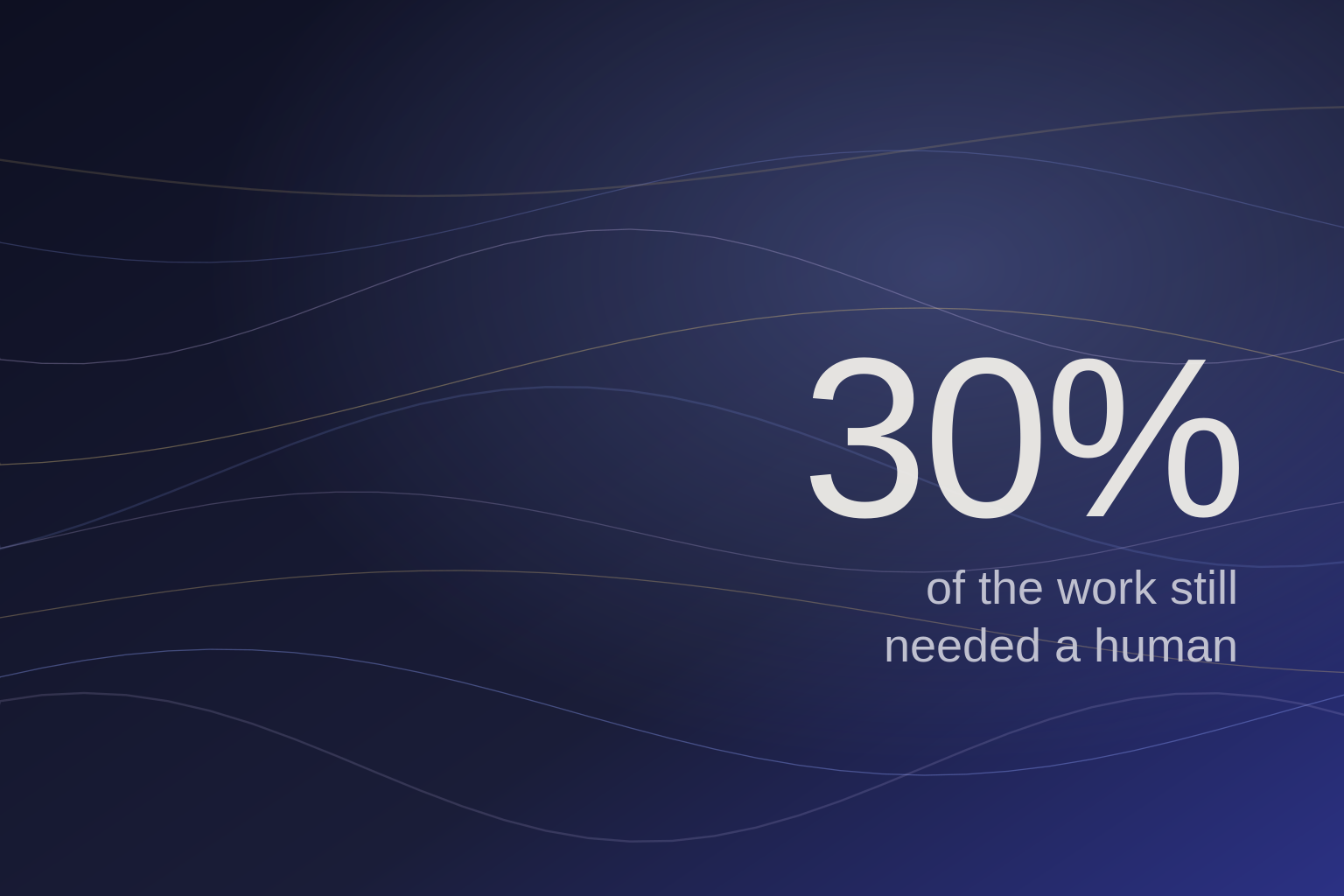
AI-native services firms should be judged by the slope of their costs
AI-native services firms are cutting the human effort behind each unit of work every quarter, yet most enterprise contracts still price that work per person. In an enterprise AI transformation bought from such a firm, buyers who price the falling cost curve, and baseline the KPI it moves, keep the provider motivated to automate long after the first discount.
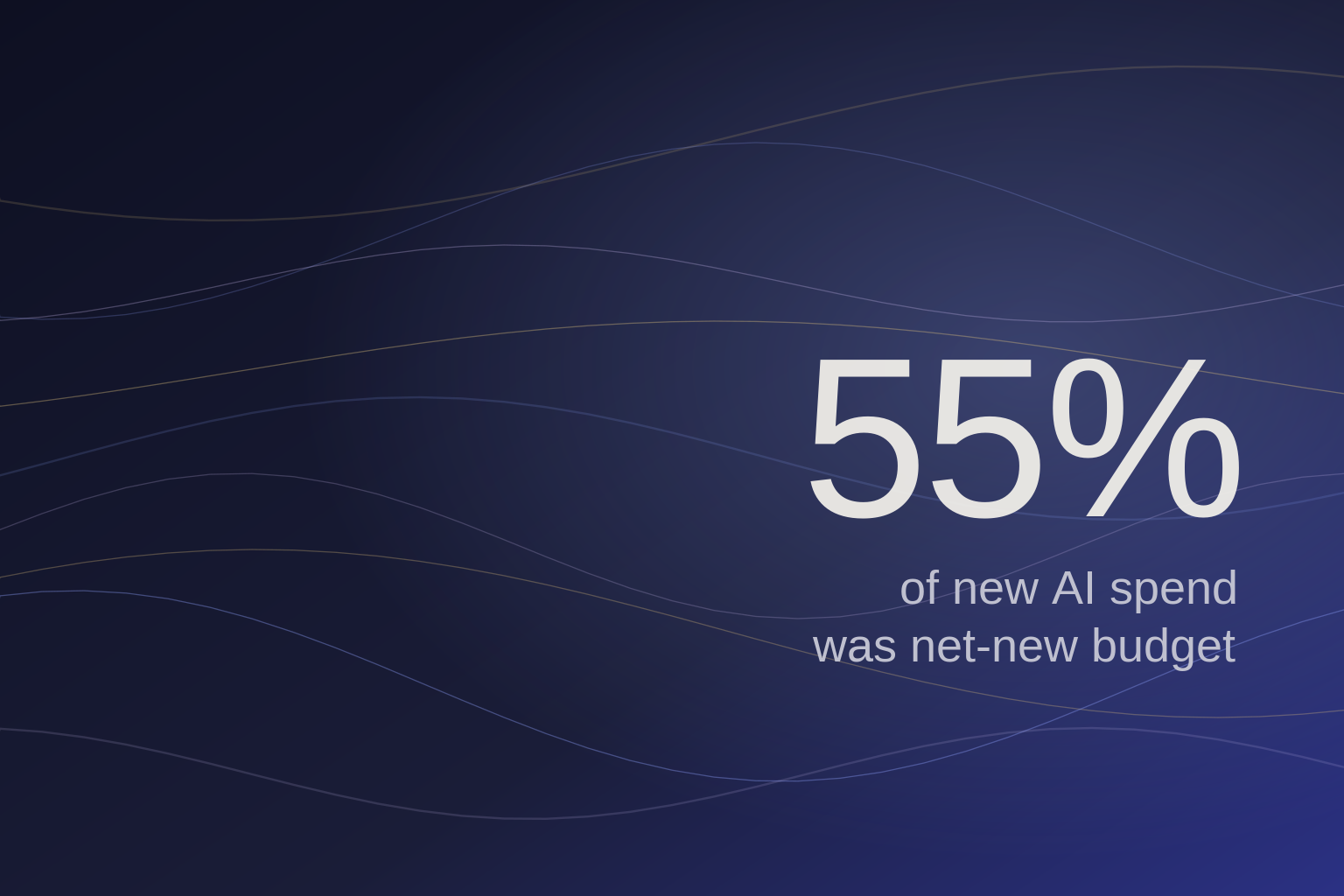
The largest AI services market is work that was never outsourced
Investors describe AI services as a transfer of outsourcing and labor budgets, yet most new enterprise AI spend is net-new money. In an enterprise's AI transformation, the larger return sits in in-house work that was too specific, messy or small to hand off, and buyers who baseline that hidden cost can contract a partner's agents to do it.
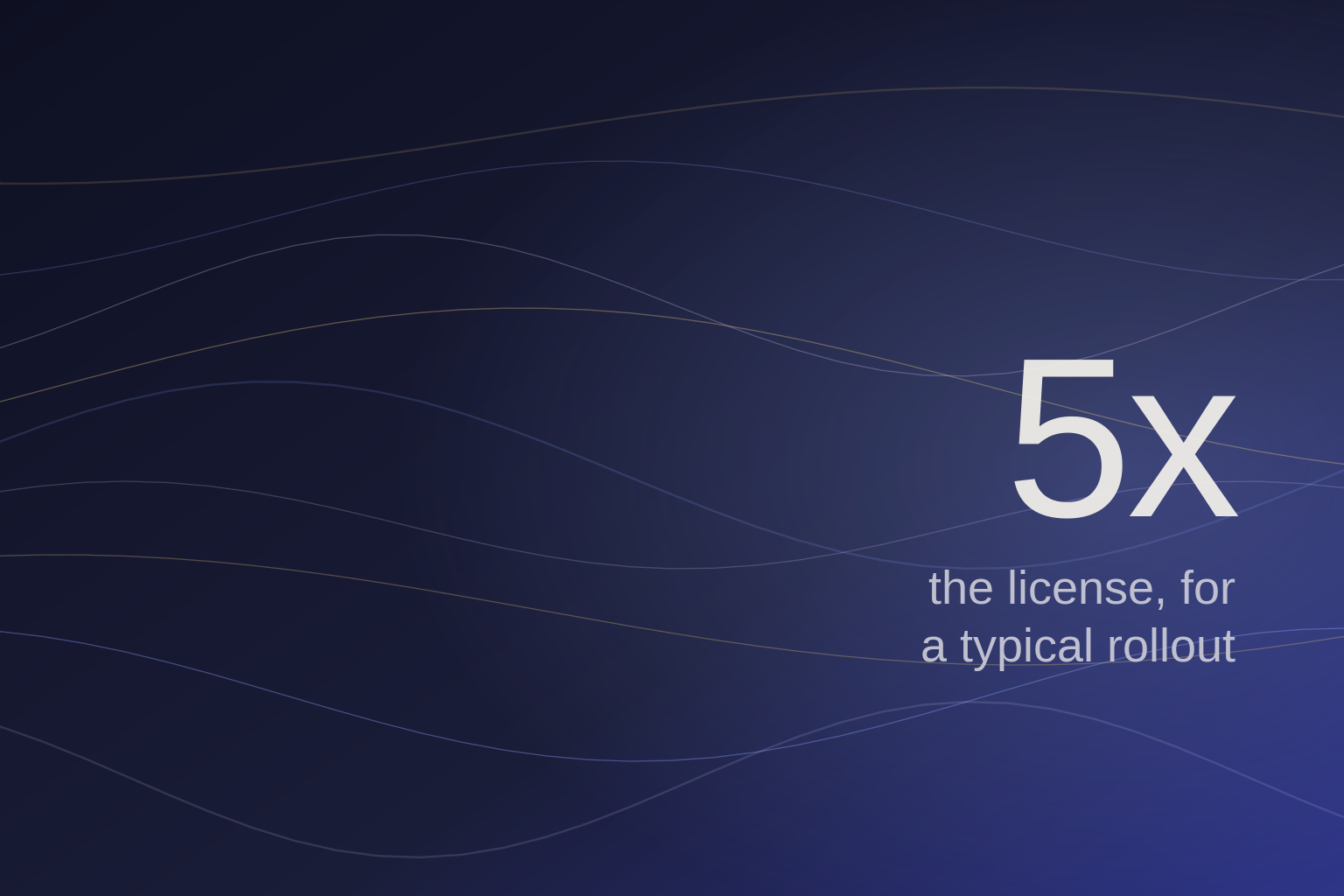
Why a new kind of systems integrator is forming around AI
Large platform rollouts often cost several times the license, and coding is the smallest part of that bill. A new class of AI-native integrators is targeting the discovery, migration, testing and adoption work that dominates every project. In an enterprise AI transformation, buyers can contract with them on the business KPI the system exists to move.
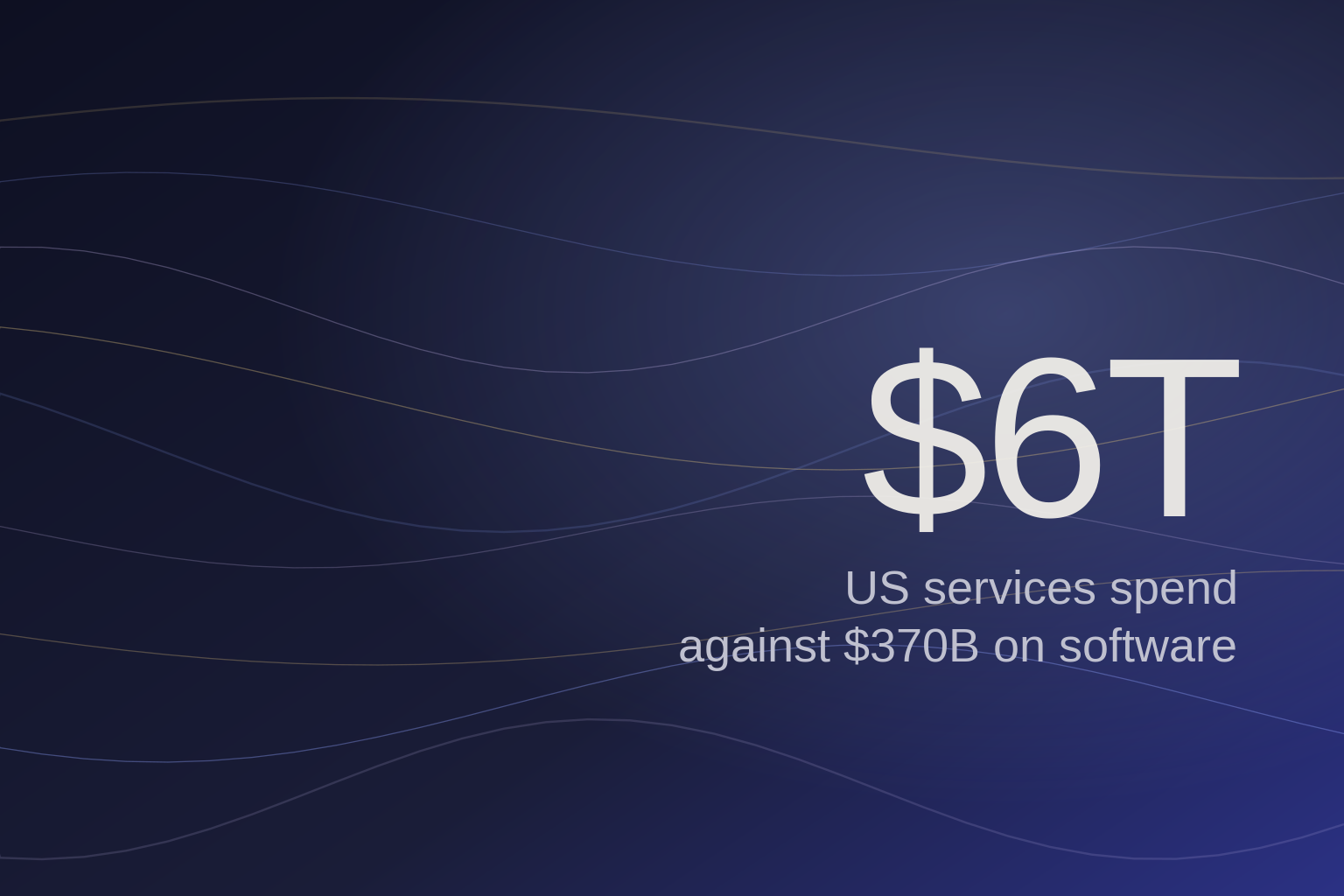
What investors see in service-as-software
Venture firms are sizing the AI prize against labor and services budgets that are many times larger than software spend. That sizing carries a commercial implication for any enterprise planning its AI transformation, because labor has always been paid for work done, and the vendors chasing those budgets will have to be paid the same way.
Eight AI-native services firms compared on ten fronts
Enterprises choosing a partner to deliver their AI transformation now meet a new class of firm that blends consulting, embedded engineers and software platforms. Compared on ten public fronts, every firm leads somewhere, and the useful difference for a buyer lies in how many fronts a single firm joins in one engagement.