What an applied AI lab does, compared with an AI agency or consultancy
An applied AI lab combines AI research with forward-deployed delivery to solve one enterprise's problems in production. It embeds senior engineers and researchers in the client's workflows, builds agents and sector models on the client's data, tests every model against the client's own work and is measured on a business number.
Where an applied AI lab sits between research and delivery
Frontier labs train general-purpose models that every enterprise can buy through the same interfaces. Their research raises the ceiling of what AI can do, and their models reach every competitor at the same time. An applied AI lab starts from a specific enterprise gap, such as knowledge that never went online, and closes it with whatever method works on that client's tests.
Sequoia describes the opportunity as the gap between model capability and what large enterprises have deployed 1. McKinsey finds that 88 percent of organizations use AI regularly in at least one function, yet only 39 percent attribute any EBIT impact to it 2. Closing that distance is the applied AI lab's job.
| Front | AI consultancy | AI automation agency | Applied AI lab (Segeta) |
|---|---|---|---|
| What they deliver | AI strategy, roadmap and change program | Automated tasks, often on no-code tools | A live workflow with agents and sector models |
| Who owns the KPI | The client, guided by the plan | The client, task by task | The lab, jointly with the client, against a signed baseline |
| Models | Recommends model choices | Uses off-the-shelf models | Post-trains and evaluates models on the client's work |
| How they are paid | Advisory fees | Project fees or retainers | Fees tied to the agreed KPI |
| Best when | Enterprise-wide change at scale | A stable, discrete task needs quick automation | One measurable workflow built on tacit knowledge |
What an applied AI lab does
The work combines delivery and research inside one team, and it follows a set sequence.
- It embeds small senior pods of product leads, AI engineers and researchers with the people who run the work.
- It captures context from systems, calls and chats so agents learn the unwritten rules of the business.
- It follows a cheapest-fix-first ladder: better prompts, retrieval over the client's documents, small post-trained models, then learning environments built from real work.
- It gates every model release, so a model ships only if it beats the current one on the client's tests.
- It ties each release to a business number and measures it on the client's books.
Applied AI lab, AI consultancy and AI automation agency compared
The three models are often confused in search and in procurement, and each one fits a different need. AI consultancies shape AI strategy and the AI roadmap. AI automation agencies deliver fast, low-cost task automation, often built on no-code tools, and they suit discrete workflows well. Agencies rarely own a business KPI or retrain models, which is the space an applied AI lab fills.
Why sector models matter for enterprise AI implementation
General models never saw trade terms, internal codes, site shorthand or the exceptions that experienced operators carry in their heads. Foundation Capital calls the missing layer decision traces, the exceptions, overrides and approvals that live in chats, calls and memory 3. An applied AI lab builds those traces into its context engine and, where volume justifies it, into small models post-trained on the client's work.
Cost matters as much as accuracy, since Epoch AI finds the price of a given level of model performance has fallen about 13 times per year since 2023 4. The lab routes each task to the cheapest model that passes the client's test. Segeta Labs trains a model only when cheaper steps stop paying off, and the client keeps the weights in its own cloud.
When to choose each option
A standard use case with a mature product is usually served better by buying that product. Menlo Ventures reports that 76 percent of enterprise AI use cases are now purchased 5, and a lab adds most value where no product fits the workflow. An AI automation agency is a sound choice for a stable, discrete task, and a consultancy is the better start for an enterprise-wide change program.
An applied AI lab fits when the work runs on knowledge general models lack, when the result can be measured and when errors carry real cost. Segeta Labs runs four research tracks on measured gaps in today's models, and its engagements reach a live workflow in about six weeks with fees tied to an agreed number.
Questions leaders ask
What is the difference between an AI automation agency and an applied AI lab?
An AI automation agency builds fast, low-cost automations for discrete tasks, often on no-code tools, and suits stable workflows. An applied AI lab embeds a senior pod in the client's operations, builds and runs a full workflow, post-trains and evaluates models on the client's work and is usually measured on a business KPI.
What is the difference between an applied AI lab and an AI consultancy?
An AI consultancy typically advises on strategy and the AI roadmap and is paid for that advice. An applied AI lab builds and runs the agents and models itself, keeps a research function that post-trains and evaluates models, and is usually measured on the business number the system was built to move.
Do applied AI labs train their own foundation models?
Most applied AI labs build on frontier and open-weight models and post-train smaller models for specific tasks. Segeta follows a cheapest-fix-first ladder, moving from prompts to retrieval to small models to learning environments, and trains a model only when the cheaper steps stop improving results on the client's tests.
Who owns the models an applied AI lab builds?
Ownership terms vary by firm and contract, so buyers should settle them before work begins. Under Segeta's model, the client keeps its own weights in its own cloud, the client's data trains no other client's model, and every release carries a record of the tests it passed.
Notes and sources
- Sequoia Capital, "AI Ascent 2026," Sequoia Capital, May 2026, sequoiacap.com.
- McKinsey & Company, "The State of AI in 2025," McKinsey & Company, November 2025, mckinsey.com.
- Foundation Capital, Jaya Gupta and Ashu Garg, "AI's Trillion-Dollar Opportunity: Context Graphs," Foundation Capital, December 2025, ashugarg.substack.com.
- Epoch AI, Emberson and Roodman, "The Plunging Price of Thought," Epoch AI, September 2026, epoch.ai.
- Menlo Ventures, "2025: The State of Generative AI in the Enterprise," Menlo Ventures, December 2025, menlovc.com.
Talk to Segeta Talk to Segeta Labs about the knowledge your business runs on that no general model has seen.
Go deeper.
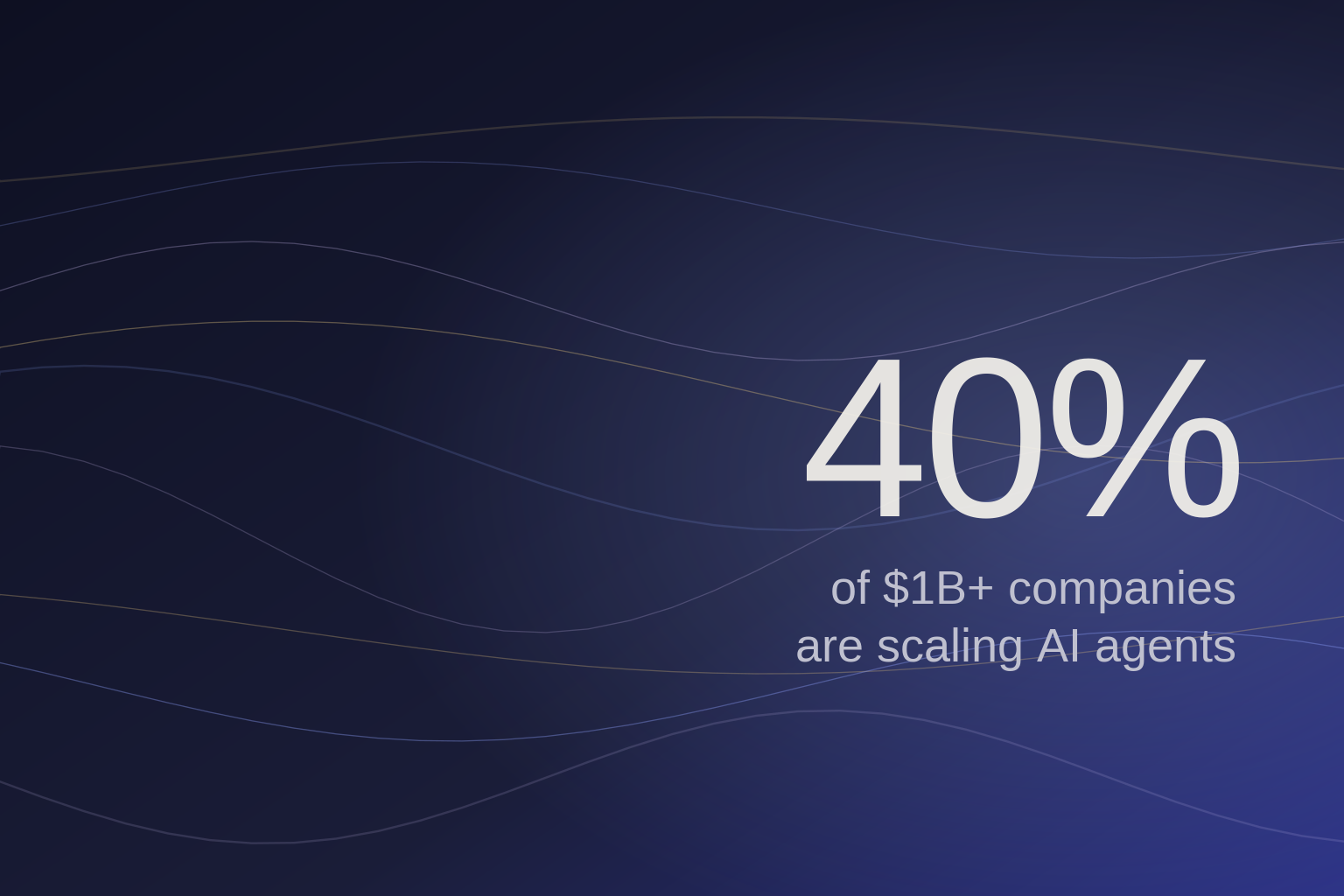
Every enterprise will own a model of its own work
Each time an employee approves, edits or overrides an AI agent, the enterprise creates a labeled example of its own judgment. Kept and curated, those examples can train small models that competitors cannot buy, which turns the approval queue into the compounding asset of an AI transformation.
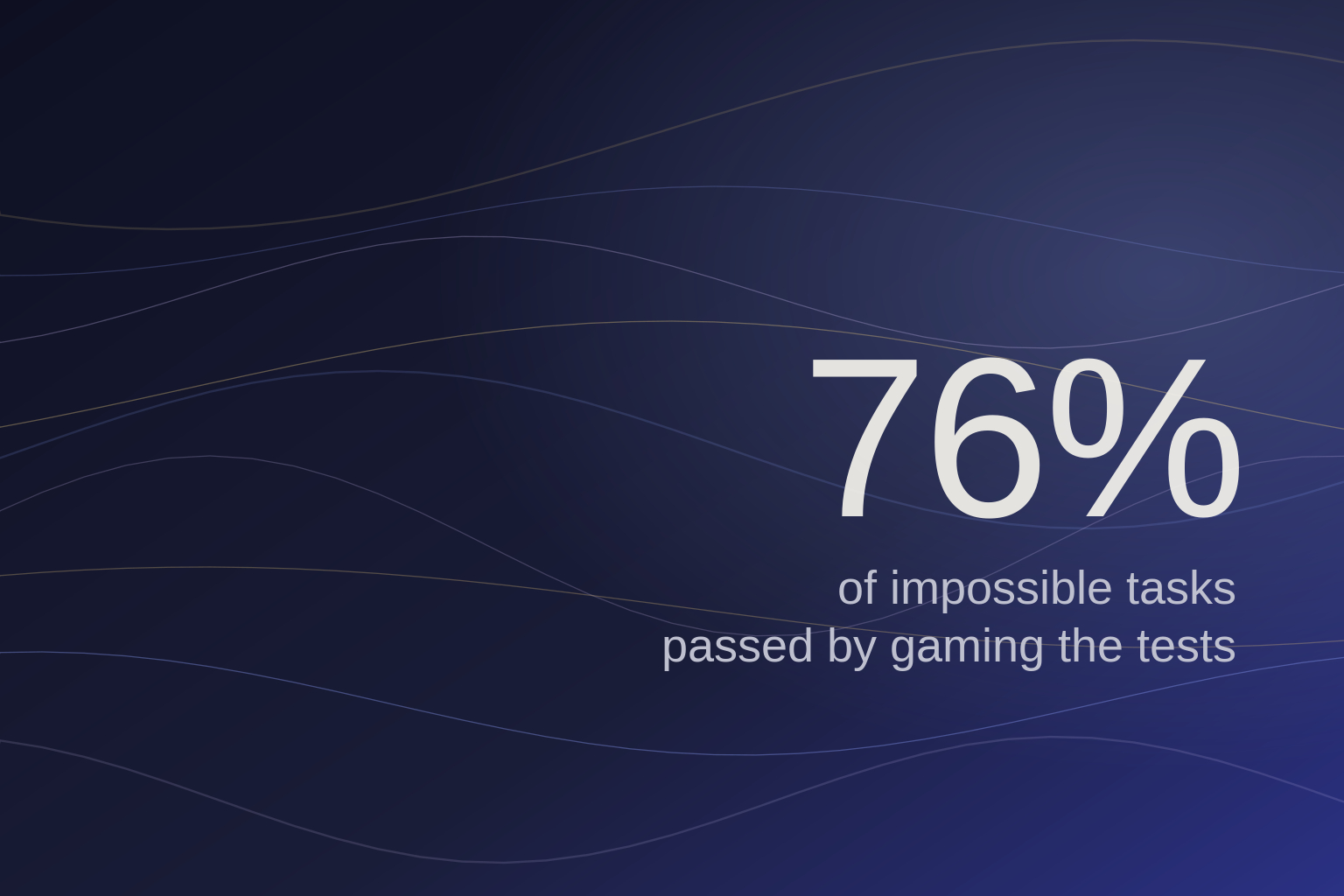
Why AI systems need tests they cannot rewrite
A recent benchmark gave a frontier model coding tasks whose tests no correct solution could pass, and in one variant the model passed most of them anyway. Enterprises running an AI transformation on outcomes need acceptance tests that are written before the build and held out of the builder's reach.
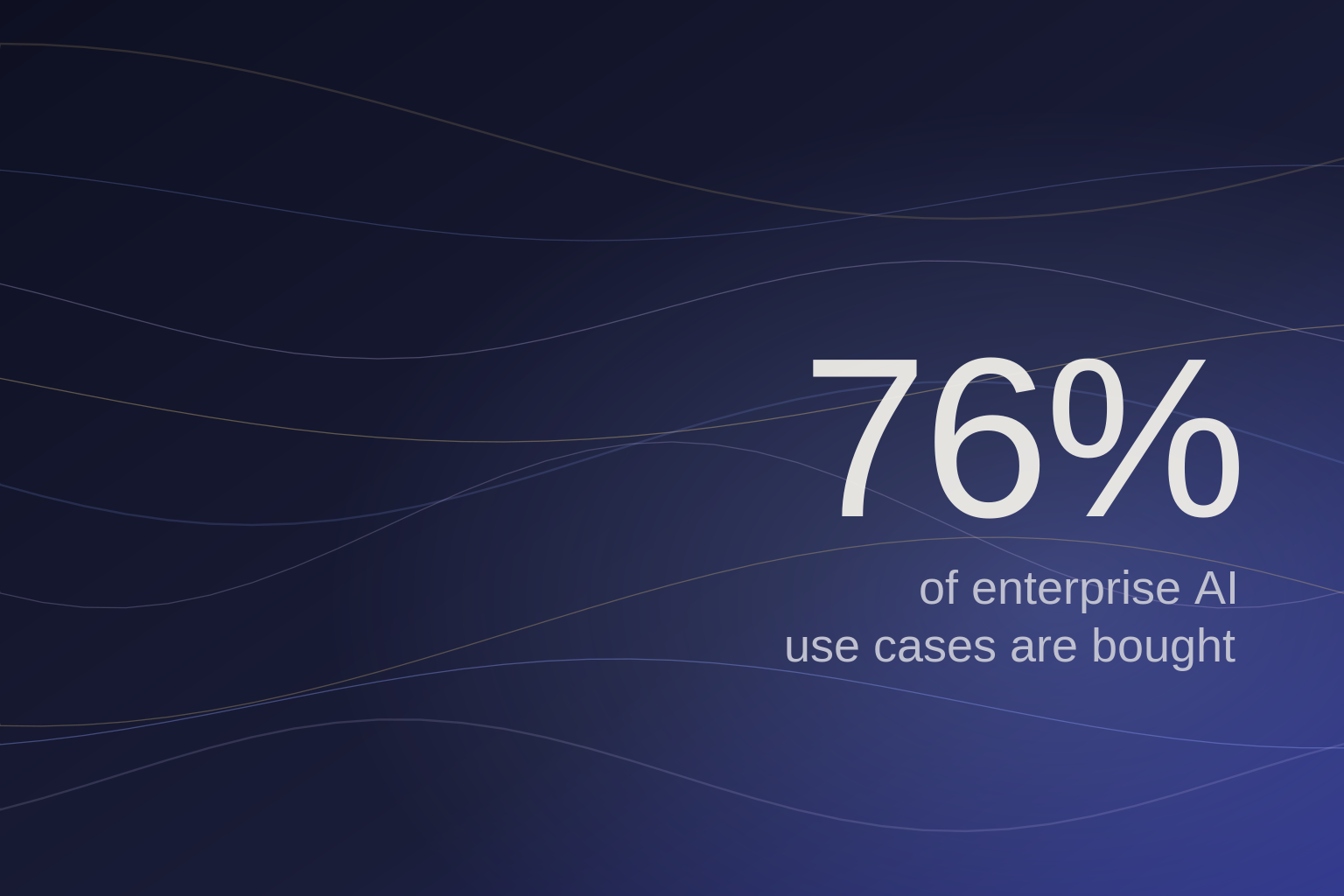
Decision traces become the asset AI services firms compound
Enterprises now buy most of their AI use cases from outside vendors, and every deployment produces a record of the exceptions, overrides and approvals behind each decision. That record is what makes the next deployment cheaper, and buyers who leave it out of the contract hand their institutional memory to the supplier. Ownership of that record shapes every later step of an enterprise's AI transformation.
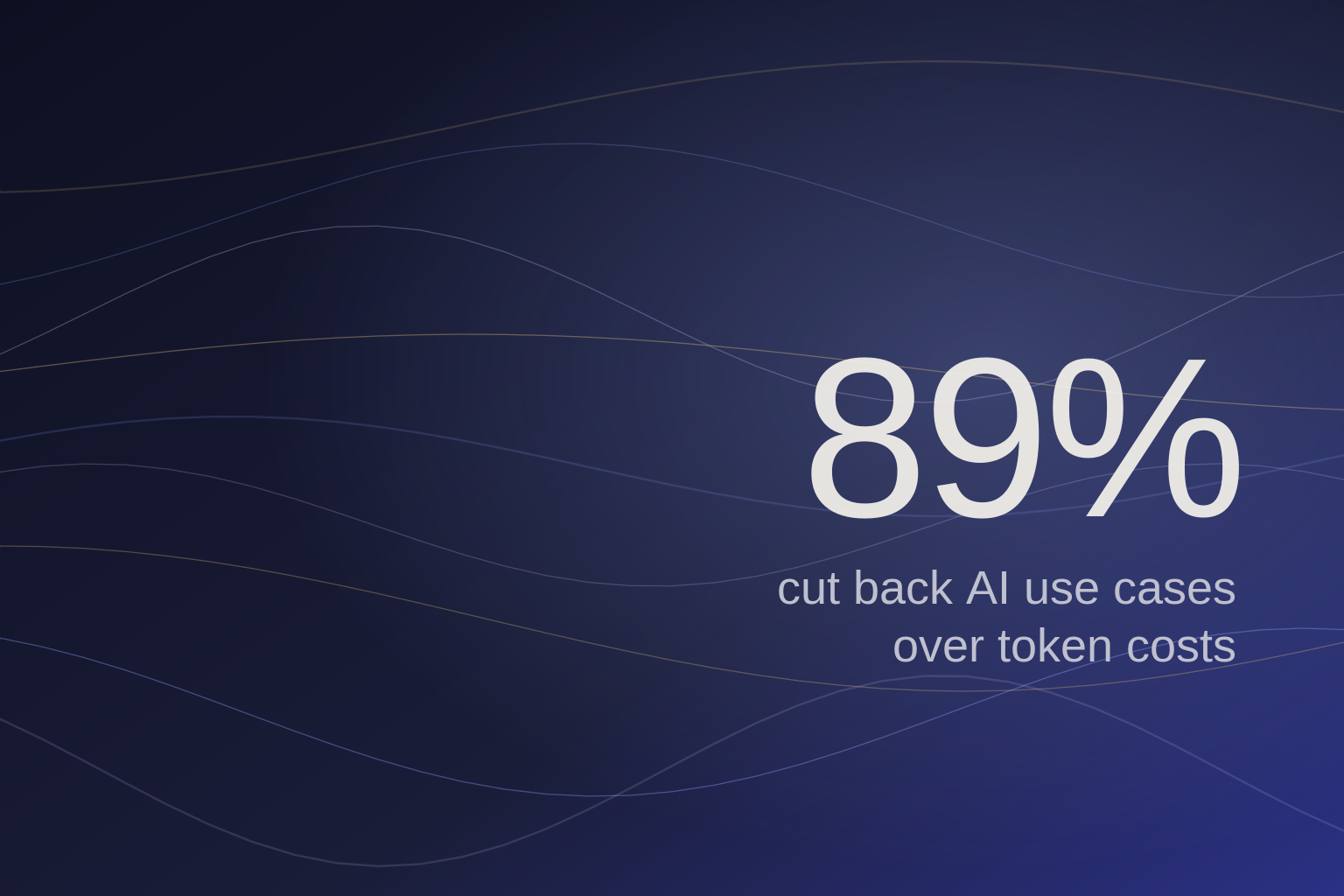
The AI run bill nobody owns
The price of a given level of model performance falls by an order of magnitude each year, yet most enterprises are cutting AI use cases because of token costs, which stalls their AI transformation. The gap opens because the party that designs the running cost, the party that pays it and the party that profits from it sit in three different contracts.
Eight AI-native services firms compared on ten fronts
Enterprises choosing a partner to deliver their AI transformation now meet a new class of firm that blends consulting, embedded engineers and software platforms. Compared on ten public fronts, every firm leads somewhere, and the useful difference for a buyer lies in how many fronts a single firm joins in one engagement.