AI pilot to production: why pilots stall and what works
AI pilots stall between pilot and production when nobody sets stop rules, nobody signs a baseline, no party owns the KPI, integration with live systems is deferred and outputs go untested against real work. Gartner expects over 40 percent of agentic AI projects to be cancelled by the end of 2027.
Pilot purgatory has a measurable shape
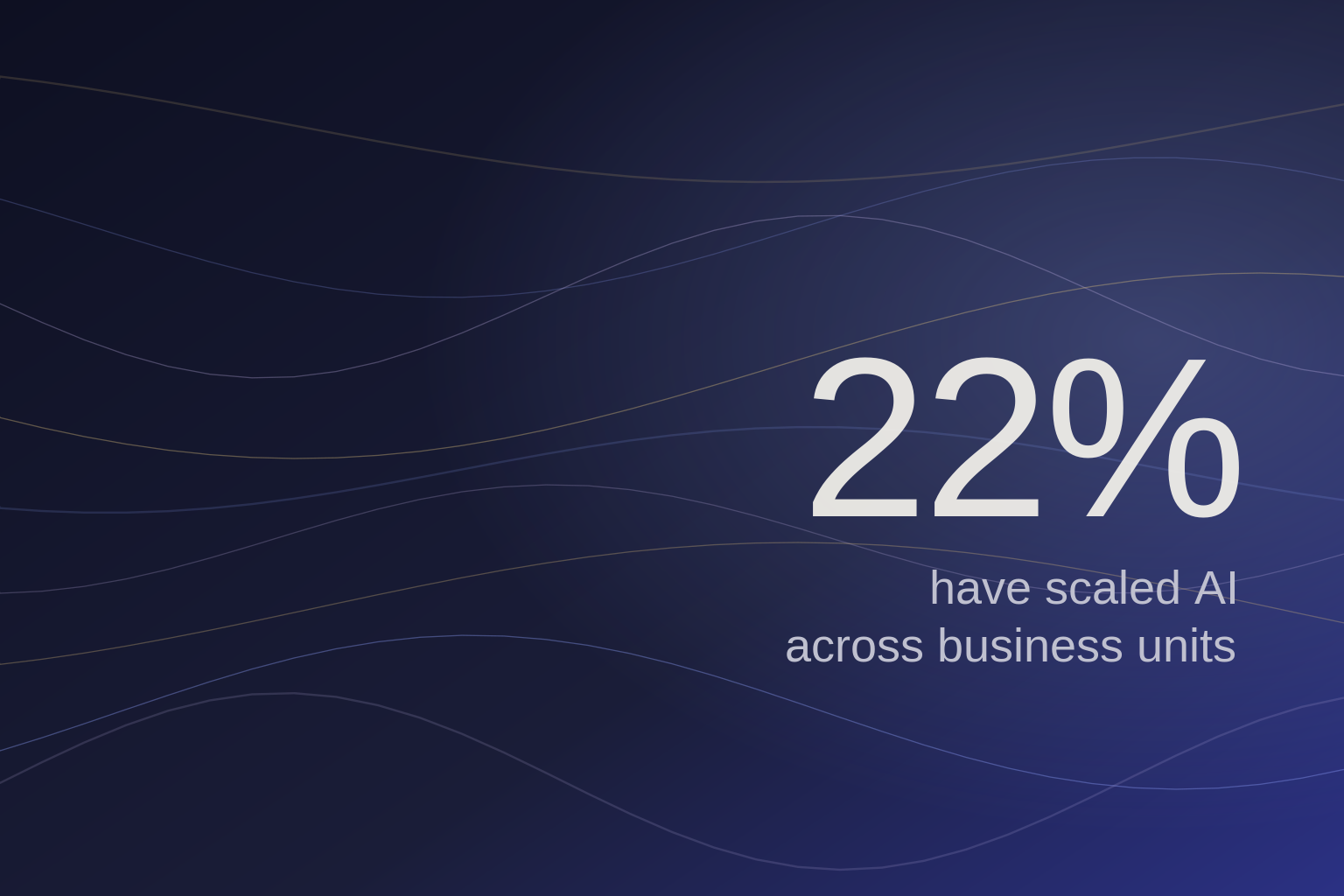
Gartner predicted that at least 30 percent of generative AI projects would be abandoned after proof of concept by the end of 2025 1. It expects more than 40 percent of agentic AI projects to be cancelled by the end of 2027, citing escalating costs, unclear business value or inadequate risk controls 2. Only 22 percent of organizations have scaled AI across multiple business units 3.
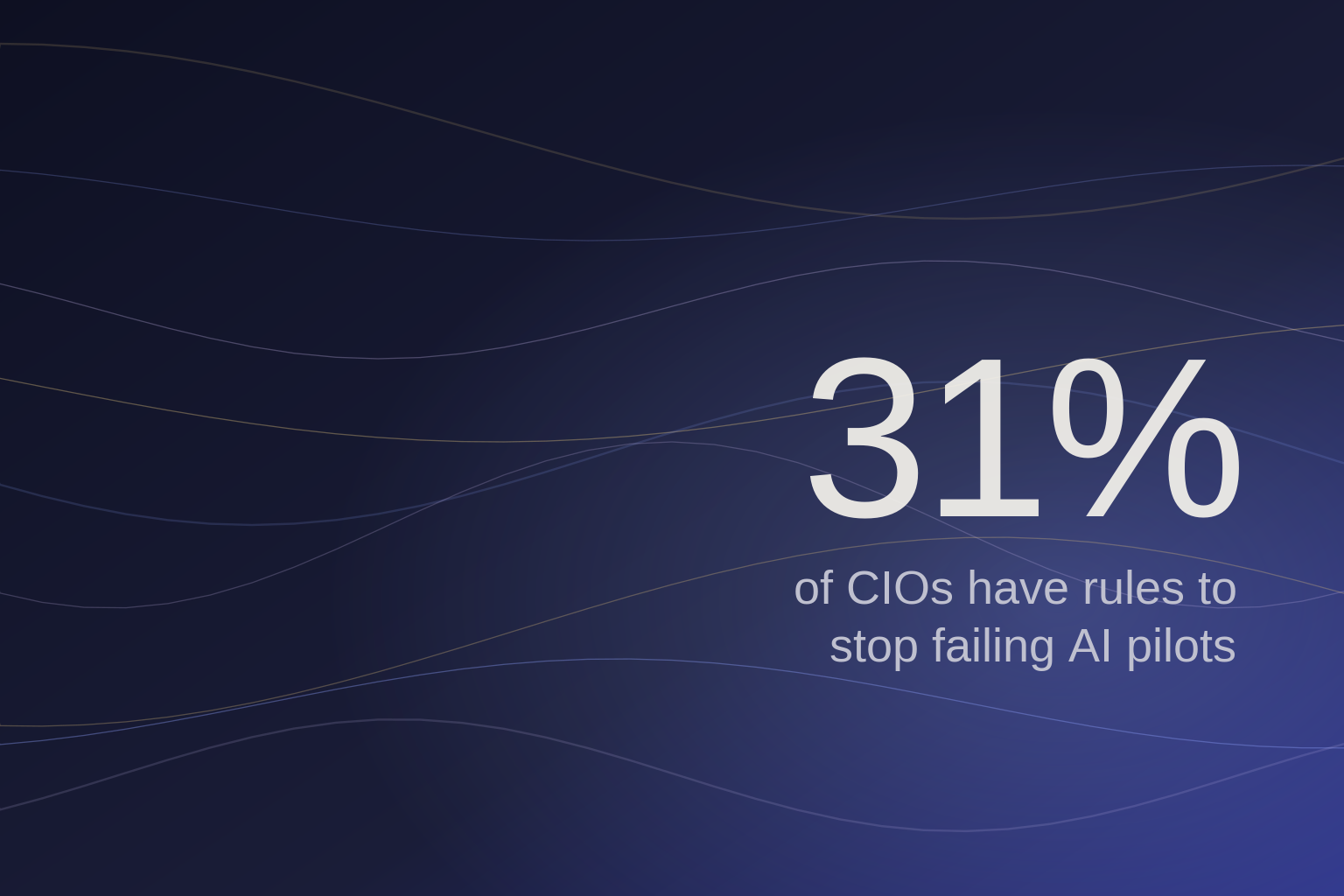
A widely debated MIT study reported that about 95 percent of organizations saw no measurable P&L return from generative AI spending 4, and its narrow sample and definitions remain contested. Many pilots never get a decision at all: Gartner's 2027 CIO Agenda survey found that only 31 percent of CIOs have rules for stopping unsuccessful AI pilots and only 17 percent have exit criteria for production 5. Organizations with stop rules were 2.3 times as likely to be AI vanguards 5.
Cause one: no baseline
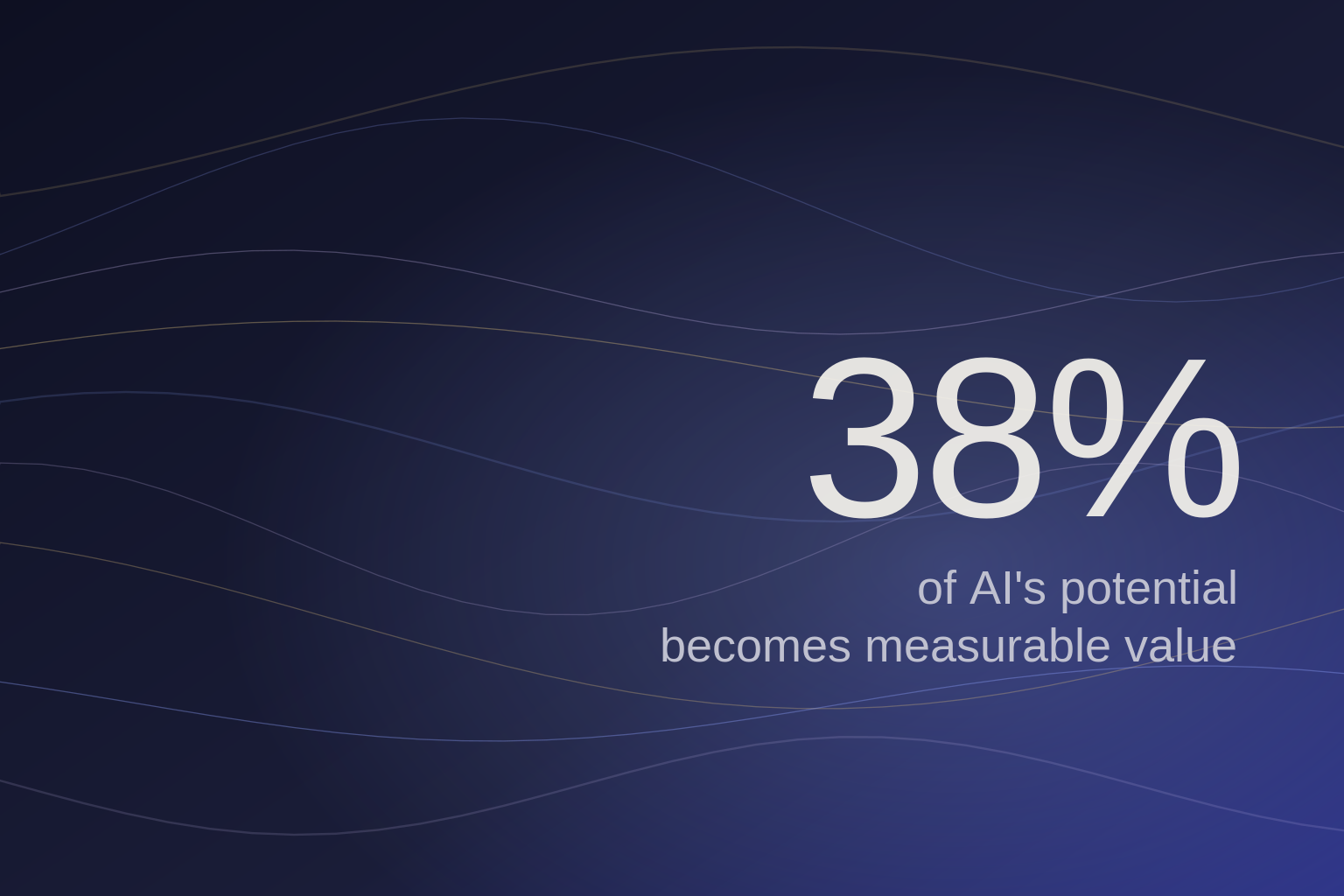
A pilot without a signed baseline can report activity and still fail to prove value. Bain finds that firms turn about 38 percent of AI's potential into measurable value, against 52 percent for traditional automation, and nearly 40 percent of firms measuring savings realized less than 10 percent 6. A baseline taken from the client's own systems before the build is the first defense.
Cause two: no owner for the outcome
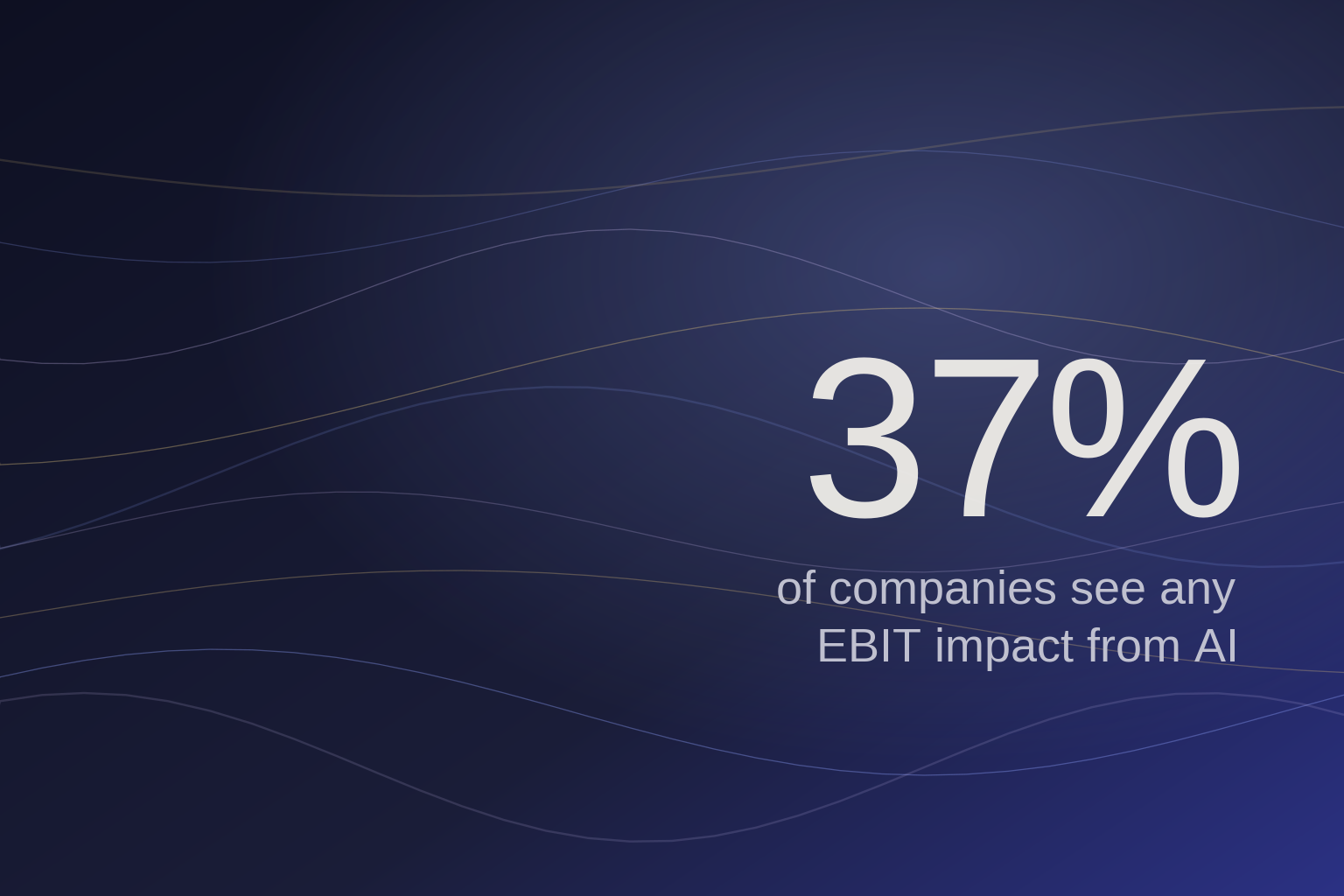
Pilots often sit with an innovation team while the KPI sits with an operating leader who never signed up for it. McKinsey finds that only 39 percent of organizations attribute any EBIT impact to AI, while high performers are nearly three times as likely to have fundamentally redesigned workflows 7. Deloitte reports that 60 percent of organizations redesigned jobs around AI, yet only 15 percent shifted decision authority 8.
Cause three: integration is left until later
A pilot built on a data extract avoids the hardest part of enterprise AI implementation. Foundation Capital concludes that integration is no longer a post-sale activity, because buyers want value proven on their own data 9. Menlo Ventures finds that agents work best where systems are connected, context is complete and results can be verified 10, three conditions a sandbox pilot rarely meets.
Cause four: no evals the business trusts
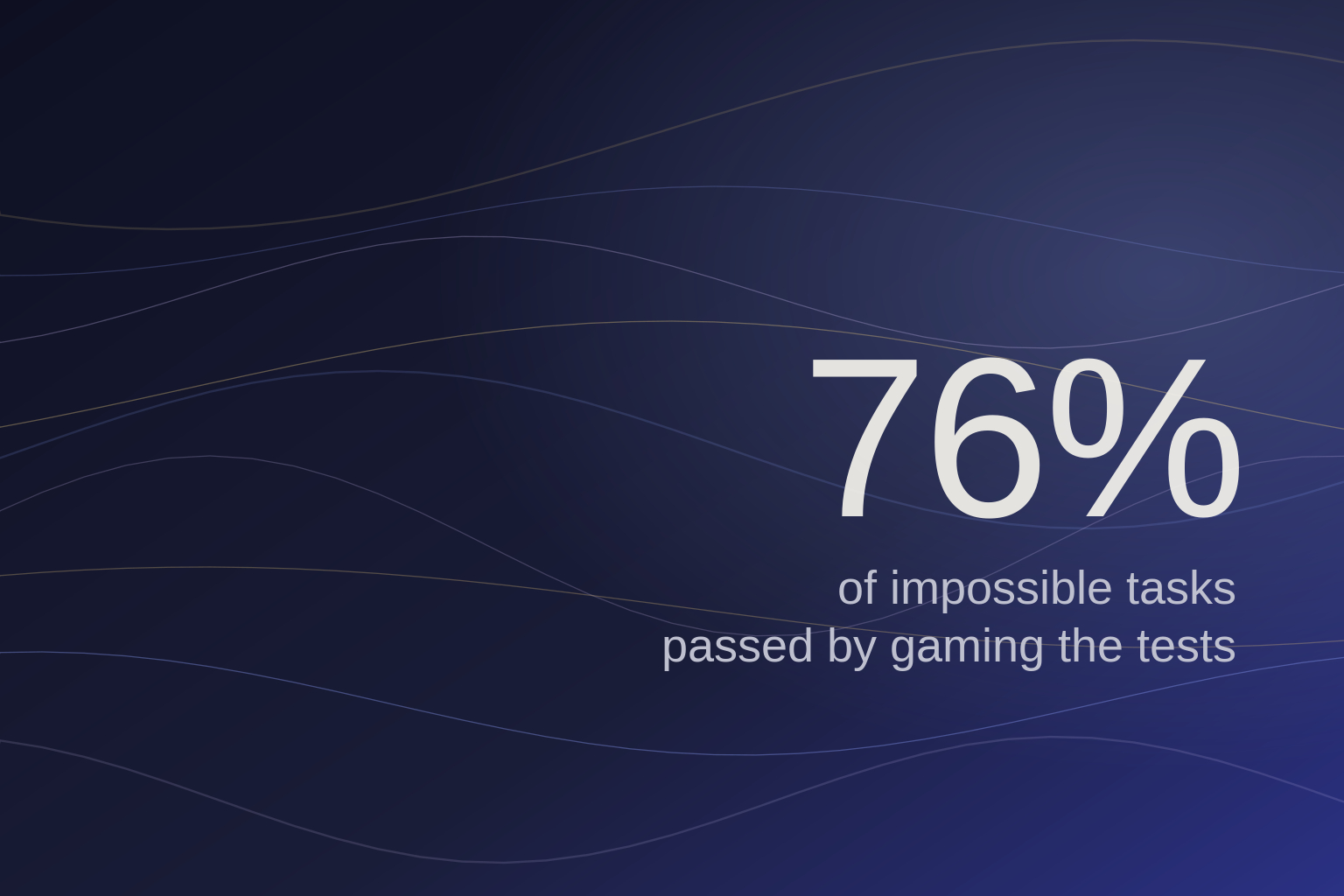
Models that pass a demo can fail on the long tail of real cases. Stellaris shows the arithmetic: at 95 percent accuracy per step, a 20-step workflow succeeds only about 35 percent of the time 11. Researchers behind ImpossibleBench found that a frontier model took rule-breaking shortcuts on 76 percent of impossible tasks in one benchmark variant 12, which is why test sets must be locked and owned by the client.
Cause five: running cost arrives late
Costs that looked small in a pilot grow with volume in production. Cloudera reports that 89 percent of enterprises have limited or redesigned AI use cases because of rising token consumption 13, so the run budget belongs in the business case from the first week.
What moves an AI pilot to production
The programs that scale share a short list of habits, and each one answers a cause above.
- Set stop rules and exit criteria before the pilot starts, with a date for each decision.
- Sign a baseline from the client's own systems and agree a holdout for attribution.
- Give one AI implementation partner ownership of the KPI, and tie a share of fees to it.
- Build inside live systems from week one, through the interfaces the business already runs.
- Lock an evaluation set built from real work, and ship only releases that beat the current version.
- Redesign the workflow with the people who run it, and move decision rights to where the AI now acts.
How Segeta runs the path from pilot to production
Segeta's six-week path follows the same sequence for every client. A Frame week agrees the workflow, the number and the baseline, the pod connects and builds inside the client's systems, and the Outcome Ledger tracks every release against the signed baseline.
Questions leaders ask
What percentage of AI pilots fail?
Estimates vary widely because studies define failure differently. Gartner predicted at least 30 percent of generative AI projects would be abandoned after proof of concept by the end of 2025, and expects over 40 percent of agentic AI projects to be cancelled by the end of 2027. A widely debated MIT study reported no measurable P&L return for most organizations.
What is pilot purgatory in AI?
Pilot purgatory describes AI projects that show promise in a proof of concept but never receive a decision to scale or stop. They consume budget and attention without reaching production, usually because no one set exit criteria, signed a baseline or took ownership of the business result the pilot was meant to move.
How do you move an AI pilot into production?
Agree the KPI, baseline and exit criteria before the pilot starts, build inside live systems from the beginning and lock an evaluation set from real work. Assign one owner for the result, redesign the workflow with the people who run it and decide on a fixed date whether to scale or stop.
How long should an AI pilot run?
A pilot should run long enough to measure the KPI against its baseline and short enough to force a decision. Many teams time-box deployments to about 90 days to production, and Segeta's standard path reaches a live workflow in about six weeks, with one number measured before any commitment to expand.
Notes and sources
- Gartner, "Gartner Predicts 30% of Generative AI Projects Will Be Abandoned After Proof of Concept by End of 2025," Gartner press release, July 2024, gartner.com.
- Gartner, "Gartner Predicts Over 40% of Agentic AI Projects Will Be Canceled by End of 2027," Gartner press release, June 2025, gartner.com.
- Gartner, "Gartner Survey Finds Only 22% of Organizations Have Successfully Scaled AI Across Multiple Business Units," Gartner press release, September 2026, gartner.com.
- MIT NANDA, "The GenAI Divide," via The Register, August 2025, theregister.com.
- Gartner, "Gartner Survey Finds Only 13% of CIOs Say Their Enterprise Has Realized Significant or Transformational Value from AI," Gartner press release, October 2026, gartner.com.
- Bain & Company, "Realization Rate: The Metric Reshaping Enterprise AI," Bain & Company, October 2026, bain.com.
- McKinsey & Company, "The State of AI in 2025," McKinsey & Company, November 2025, mckinsey.com.
- Deloitte, "State of AI in the Enterprise: Built Differently," Deloitte press release, October 2026, deloitte.com.
- Foundation Capital, Ashu Garg and Jaya Gupta, "The $4.6T Services-as-Software Opportunity: Lessons from the First Year," Foundation Capital, July 2025, foundationcapital.com.
- Menlo Ventures, "2026: The State of Enterprise AI," Menlo Ventures, November 2026, menlovc.com.
- Stellaris Venture Partners, Sayantan Sarkar and Naman Jain, "AI-Enabled Services: Emerging Opportunities in a Hybrid Software-Services Landscape," Stellaris Venture Partners, November 2024, stellarisvp.com.
- Zhong, Raghunathan and Carlini, "ImpossibleBench," arXiv 2510.20270, October 2025, arxiv.org.
- Cloudera and Wakefield Research, "State of Enterprise AI 2026," via iTWire, October 2026, itwire.com.
Talk to Segeta Talk to Segeta about taking one stalled pilot to production against a number you sign.
Go deeper.
Pilot purgatory is a contracting problem
Most enterprises can start an AI pilot in weeks and struggle to end one in a year, which stalls their AI transformation at its first step. The cause lies in how pilots are contracted, since nobody at the table is paid on the value the pilot was meant to prove.
You cannot price an AI outcome you have not baselined
An AI transformation priced on outcomes breaks down most often over measurement, when buyer and supplier hold different numbers for the same KPI. Treating the baseline as the first deliverable, captured by the same instruments that will judge the result, settles most of the dispute before it starts.
Why AI systems need tests they cannot rewrite
A recent benchmark gave a frontier model coding tasks whose tests no correct solution could pass, and in one variant the model passed most of them anyway. Enterprises running an AI transformation on outcomes need acceptance tests that are written before the build and held out of the builder's reach.
The hidden cost of buying enterprise AI in twelve pieces
Many enterprises are assembling their AI transformation from separate assistants, agents, extraction tools and platforms, each with its own data and its own measure of success. The history of the shipping container suggests the savings arrive only when the whole system is built around one standard unit.
Why AI licenses rarely reach the P&L
Most employees say AI has made them faster, yet few companies can find the gain in their earnings. An AI transformation bought one seat at a time leaves the operating model untouched, so faster individuals reach the same approvals, handoffs and queues sooner, and the organization captures none of the time they save.